
She/Her/Hers
Lesbian
|
|
EMILY PRATT SLATIN | About | Press Kit | Notebook | Music Playlist | She/Her/Hers Lesbian |
Retired Career Fire and EMS Lieutenant-Specialist, Writer, and Master Photographer, living in Vermont.
October 21, 2026—Stamford, New York (Mom's House)
My morning began with blueberry pancakes and coffee at TP’s Cafe in Stamford, New York, with Makayla.
After breakfast, we returned to Mom’s house for about an hour before deciding we needed something to do. We settled on Oneonta. Makayla stopped at Stewart’s in Stamford to fill her car with gas, and off we went.
Our first destination was Brooks for lunch.
I’ve been eating at Brooks since I was a small child, and I’ve ordered essentially the same thing for as long as I can remember: half a chicken and French fries. I skipped the salad bar because the vegetables looked literally sad. The only thing that has changed over the decades is the price. Everything else has remained more or less the same since childhood.
Unfortunately, the quality began slipping after the original owner died, and the chicken I had last year was downright terrible. I’m pleased to report that someone apparently hired the right cook, because today’s chicken was starting to get good again.
We were driving down Main Street in Oneonta when I noticed a blacked-out Chevrolet Impala ahead of us. It had antennas on the roof and upgraded suspension. I recognized the significance of those details immediately.
I told Makayla it was a cop car.
She disagreed.
The driver of the Impala proceeded to sit through an entire green light, apparently oblivious to the fact that traffic was supposed to be moving. The light turned yellow, then red, and Makayla, understandably frustrated, honked her horn and made a confused face.
The Impala promptly lit up like a fucking Christmas tree.
A detective stepped out and approached Makayla’s window, where he began lecturing her about how being impatient wasn’t going to make traffic move any faster.
He shut the road down instead. The irony was apparently lost on him.
Makayla pointed out that allowing an entire green light to go by, then blocking traffic to yell at someone, wasn’t exactly helping traffic move, either. She also questioned why he was concerning himself with her expression when, according to what we’d observed, people were openly using illegal drugs in the nearby park.
I burst out laughing. I couldn’t help myself. The entire situation was absurd.
The detective appeared increasingly irritated and eventually announced that everything about Makayla’s car was illegal.
Everything.
He then returned to his Impala, turned off the emergency lights, drove through the intersection, and parked in front of the public safety building.
I laughed about it for the rest of the afternoon.
We eventually made it to the nail salon.
A woman had finished receiving her services, stood up, put on her coat, and then decided to criticize practically everything the staff had done. She announced that the services hadn’t met her expectations of perfection and refused to pay.
The women working at the salon were understandably upset. Eventually, the customer reluctantly paid, but she made it abundantly clear that nobody would be receiving a tip.
The women working on our manicures stopped and demanded that Makayla and I pay before they would finish.
I said sure. No problem.
Makayla, however, had a question.
“Does this happen often?”
One of the women in charge gave her a dirty look.
An awkward silence settled over the salon.
A passing Norfolk Southern freight train traveling along the tracks directly behind the Southside Mall sounded its horn.
I immediately started laughing again.
After our manicures, Makayla suggested we visit The Peppercorn Tavern in Charlotteville.
My parents moved to the area in 1986, and despite having known this part of New York for forty years, I had never been aware of the place.
The first thing I noticed was the dirt parking lot.
Along its perimeter was an assortment of decorations that looked as though Cracker Barrel had held a rummage sale and the owners of the tavern had walked in and announced, “I’ll take it.”
Makayla parked her car, and I climbed out.
A man who wasn’t much older than Makayla stood outside holding a bottle of beer. He looked over at me.
“Howdy, ma’am,” he said.
“Hey.” I said.
Inside, the tavern had the usual assortment of entertainment: a pool table, darts, a digital jukebox, and, inexplicably, a photo booth tucked into the corner.
Makayla wanted to try the photo booth and asked me for five dollars. I handed her a five dollar bill and told her to have fun.
A few minutes later, she returned and asked whether I had a different five-dollar bill.
I did, so we traded.
She disappeared again. Several minutes passed before she returned with another request.
“Aunt Emily, you’re good with photos. Can you help me?”
I walked over and touched the screen. It opened to a fucking Windows login page. The staff explained that the photo booth had worked perfectly until someone decided to fix it by unplugging it and plugging it back in.
Apparently, nobody knew the login credentials, and the machine had been sitting there ever since, patiently waiting for someone to enter the correct password.
So much for that.
While we were at the tavern, I met a woman who turned out to be genuinely cool. We got to talking about tattoos, and she showed me an impressive tattoo running up her side and onto her back. I was fascinated.
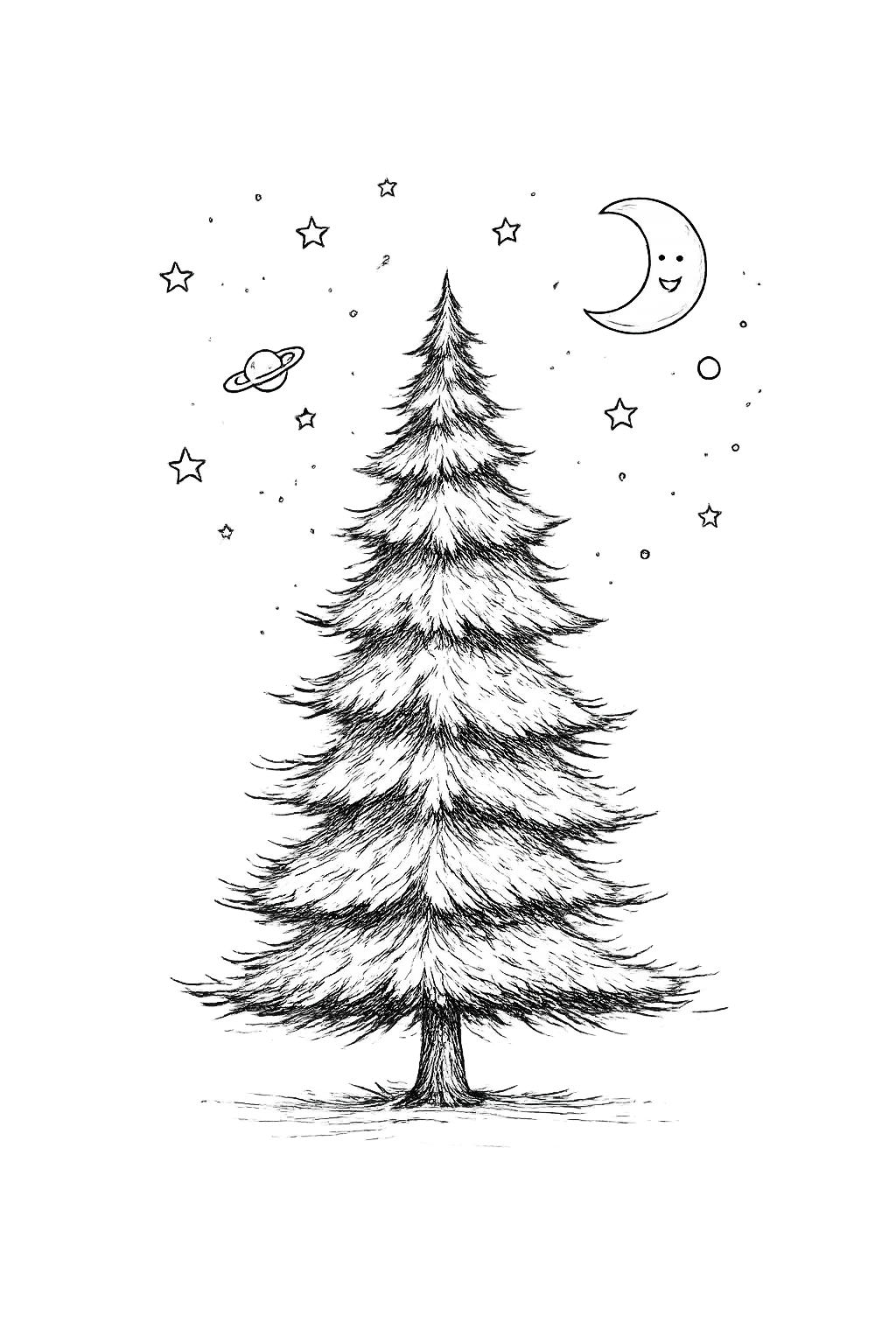
I showed her my own tattoo, a design featuring a pine tree, stars, the moon, Saturn, and a small circle representing god.
She admired it and asked who had drawn it.
“I did,” I told her. “But it hurt like a fucker when I got it done.”
She mentioned having a daughter, and my mind immediately began doing what it does best: constructing an entire narrative without adequate supporting evidence.
She has a kid. She’s probably in a relationship. She’s probably heterosexual. They all are. Besides, if she’s really as cool as she seems, she’s probably not single anyway.
I could practically hear the voice of a friend reminding me that none of those considerations had necessarily stopped me before.
Makayla returned from the restroom just as the woman went back to the bar for another drink. I told Makayla I’d met this woman we have been talking to for awhile is really cool, but she had a daughter and was probably in a relationship.
“Yeah, but that’s never been a problem for you before.”
Well, fuck. She had a valid point. Shit. Now what do I do?
Nevertheless, my conscience had caught up with me, and I decided not to make assumptions about the woman’s availability or intentions.
Instead, I leaned over and said, “Hey, it was lovely meeting you. I happen to have some of my stickers. Do you like stickers?”
Her face lit up.
I handed her three stickers and my card. She admired everything before putting it in her back pocket.
Eventually, Makayla and I left The Peppercorn and headed toward Stamford. Except Makayla decided to take the scenic route in her sports car that has little to no ground clearance.
We drove along the unpaved back roads of Jefferson, passing places where she grew up, before somehow getting lost on Enid Road. And suddenly, I was reminded of another time in our lives.
When Makayla was first learning to drive, I would occasionally let her take the wheel of my red 2000 Honda CR-V. It had paramedic license plates and emergency lights across the front and rear because I used it to respond to the station when emergency calls required me to come in.
Makayla would ask me to take her out to the quietest roads, where she wouldn’t have to worry about traffic. I’d drive us somewhere suitable, and then she’d take the wheel. I remember her smiling and laughing, the window wide open, her hair blowing in the wind as she drove down some obscure country road. And we would inevitably get lost.
She had a remarkable talent for discovering roads I had never heard and never had any reason to drive down. Eventually, I’d have to get out, retrieve my handheld GPS from my work backpack, and hope I could establish a compass heading that would take us back toward Mom’s house.
I miss those days. Life was simpler then. I think Makayla was likely happier with that simplicity, too.
We made another stop at Stewart’s in Stamford, where I encouraged Makayla to get as much gas into her tank as reasonably possible in preparation for tomorrow’s trip back to Watertown.
She’s been staying at Mom’s house for several days and will likely remain there for a few weeks. She’s helping me tremendously by being there. At least I know Mom’s house is safe.
We’ve been talking almost nonstop since I arrived. She told me that I was her one and only lifelong friend who had actually given a shit about her. I assured her that I loved her and that we would always be friends, no matter what happened.
Those words stayed with me. I’ve known Makayla since she was two years old.
As we approached Mom’s house, I texted Nora to let her know where we were and that we were only moments away. Makayla proceeded to drive her sports car across Mom’s lawn to park beside my Ford Bronco Sasquatch Edition.
The contrast between the two vehicles was rather extraordinary. My Bronco was built for rough terrain. Makayla’s sports car apparently considers a lawn an existential threat.
Sure enough, she bottomed out the front bumper.
She rolled up the windows, shut off the engine, laughed with me over an inside joke, and climbed out to snap the side marker light back into the bumper. For the third time today.
Then Makayla announced that Nora had already walked down the hill to John’s, so we could head straight there. I wasn’t particularly enthusiastic.
The last time I’d been at John’s, someone had told me to get lost. But I figured, fuck it.
I walked through the door and announced, “Hey, everybody! Guess who’s back in town???”
The place was practically empty. Only Mary Jane, the bartender, and Santo, the owner, were there. Mary Jane, whom I’ve known for years, immediately shouted, “EMILY!!!”
Santo stood up from his bar stool and put his hands in the pockets of his sweatpants. Oh, fuck.
I suddenly became acutely aware of where I was.
Emily, you’re in your hometown. You grew up here. These people have known you for decades. Regardless, I’m fucked.
Then Mary Jane came around from behind the bar to meet me. She never does that. I’m royally fucked.
Instead, she hugged me.
She and Santo wanted to know who had told me to leave the last time I visited. They wanted a name, and they made it clear that whoever was responsible would be fired. Immediately. On the spot. No questions asked.
I told them I wasn’t going to identify the person. It had been an isolated incident. My family and I had been casual friends with Santo for many years, and we were all friends here.
More importantly, I knew that whoever had treated me that way likely had a family depending on their employment. I wasn’t going to be responsible for taking away someone’s livelihood over one unpleasant encounter.
Santo told me he respected my decision and assured me that I would always be welcome at his bar, no matter what. And that if anyone, staff or otherwise, ever said anything rude to me, I was to let Santo know immediately. That meant the world to me.
Mary Jane told me to sit down already because my Coke was in the way.
She reminded me that she’d convinced Santo to switch to Coca-Cola after years of serving Pepsi, which they’d carried since the bar opened.
The soda gun is still blue and says Pepsi. It dispenses Coke.
Mary Jane then demanded, “Where the hell have you been???”
She asked as though I’d been deployed overseas for two years and had only just returned home.
I told her I’d been back home in Vermont.
She asked what had been happening to me there, then immediately answered her own question.
“It’s Vermont. Nothing happens in Vermont! Haha!”
I began telling her, in chronological order, some of the ridiculous things that had happened to me since the last time I’d spent the night at Mom’s house. I didn’t even make it halfway through the list before Mary Jane and Santo were laughing hysterically.
Apparently, quite a lot happens in Vermont. Or perhaps quite a lot simply happens to me in particular.
I can’t wait for the first substantial snowfall, because I have some extraordinary childhood stories to tell. When I was young, my friends and I used to drag our sleds everywhere during the winter. I had a beautiful red plastic sled that survived several winters of spectacularly poor judgment. I loved that sled.
Mom helped me put racing stripes along its sides, which I thought made it look magnificent.
I thanked her. As soon as she left the kitchen, I went under the kitchen sink and stole her furniture polish. I went in the back yard behind the shed and applied a generous amount to the underside of the sled, coating it until it resembled a thin layer of cake icing. My friend and I were out all afternoon one Saturday.
At one point, my friend and I discovered that the drainage tunnels running downhill toward the river could function as our own personal luge course.
We’d haul our sleds to the top of the hill and ride through the tunnels, eventually emerging downtown near the river. It was a horribly dangerous idea. At twelve, it seemed entirely logical.
One winter, when I was in eighth grade in Cooperstown, an enormous snowstorm buried Stamford.
Dad handed me a snow shovel.
“Get to work.”
I didn’t have much choice. I decided to begin with the car, our 1991 Honda station wagon. The snow was so deep that I used my sled to distribute my weight across the surface while I made my way toward it. When I finally dug down far enough, I discovered that the snowdrift extended approximately three feet above the roof of the car.
This presented an enormous amount of work. It also presented an extraordinary recreational opportunity. I realized I could climb out my bedroom window, slide down the drift, travel across the several feet of snow covering the Honda, continue down the driveway, and see how far I could make it before the snowplows arrived.
I made it all the way to the gap between Ace Hardware and TP’s Cafe. I was thrilled.
I called my friends at home, they called everyone they knew, and before long, I had several friends from school. We shoveled out the car and cleaned it off.
We piled the snow at the end of the driveway to make an even bigger jump. The snowplows didn’t arrive for hours, and my friends and I were having a fantastic time.
Unfortunately, I hadn’t considered what would happen when that enormous quantity of compacted snow warmed during the day and then froze solid when the temperature dropped again. As the sun began to set, the snowplows finally arrived, their enormous amber warning lights flashing and reflecting off the snow in every direction. Dad was outside shoveling and apparently didn’t notice what was coming.
The plow came through, and suddenly I had to rescue my own father from being buried in the snow, as though he’d been caught in an avalanche. His primary concern, astonishingly, was that I would not be missing school.
“Over my dead body you will miss a day of school!”
He kept repeating it.
I ended up outside until one in the morning, using the pointed end of a garden shovel to break apart enormous chunks of compacted snow and ice.
Eventually, Dad decided that we were in over our heads and we needed assistance. He marched across the street and woke the owner of Ace Hardware, who lived upstairs with his wife. The man allowed Dad to borrow a snowblower and told him that we could pay for a bag of salt the next time we came into the store. That was how things worked in Stamford back then.
The next morning, Dad drove me through the aftermath of the snowstorm, taking the back roads to Cooperstown because he was absolutely determined that I attend school.
Despite his efforts, I arrived late to first period. My science teacher decided to make an example of me in front of the class. I explained that my father was responsible for my lateness.
The teacher, who addressed me as “son,” a word I absolutely hated being called, decided to challenge me.
“What does your daddy do, son?”
“He’s a scientist,” I replied.
“A SCIENTIST!!!” he repeated mockingly to the entire class.
I pointed out that my father was across the hall talking to the principal and that the teacher was welcome to verify my explanation.
A few moments later, Dad walked into the classroom. And for the first and only time in my life, my father stood up for me and accepted full responsibility for my lateness. The teacher asked him what he did for a living.
Dad explained that he was a scientist, then reminded the man that he was an eighth-grade science teacher, while my father had worked on the Manhattan Project. Dad made it quite clear that he was well aware of the scientific matters under discussion.
Then, apparently dissatisfied with merely establishing his credentials, my father attempted to take over the class with an impromptu lecture about his involvement in the Manhattan Project.
I was thrilled, entertained, and utterly mortified. It remains one of the most extraordinary memories of my childhood.
I miss the simplicity of those earlier years. I think she misses some of that simplicity, too.
|
Copyright © 1998-2026 Emily Pratt Slatin. All Rights Reserved. About | Archives | Biography | EMD Codes | Notebook | Press Kit | Pronouns.page | RSS Feed | Sitemap | YouTube Made with grit in Middletown Springs, Vermont. |