
She/Her/Hers
Lesbian
|
|
EMILY PRATT SLATIN | About | Press Kit | Notebook | Music Playlist | She/Her/Hers Lesbian |
Retired Career Fire and EMS Lieutenant-Specialist, Writer, and Master Photographer, living in Vermont.

August 24, 2026—Middletown Springs, Vermont (Home)
Today I drove to Mach’s Market in Pawlet to buy groceries.
On the way there, I passed road work signs for miles without seeing any actual road work. There were no trucks, workers, or equipment, just an increasingly long series of signs announcing the existence of something that, from where I was sitting, did not appear to exist. Eventually I reached the intersection across the street from Mach’s and sat there for ten minutes waiting for the road crew.
Apparently the signs had been telling the truth. The actual road crew was simply farther down the road.
The years between then and now collapsed with astonishing efficiency. I had plenty of time to think, and lately I have had a great deal to think about.
There is a peculiar loneliness in being the person who notices something before everyone else. You point to the fault line, the contradiction, the missing information, or the bad assumption, and people look at you as though you created the problem by naming it. Then months later, when the problem becomes impossible to ignore, everyone acts surprised. I have lived through this pattern often enough that surprise itself now seems performative.
Humans have never made sense to me. Raising our leaders and societies only to find faults with both with untold resources spent in whatever endeavors at the time were deemed worthwhile.
We create institutions, grant them authority, surround that authority with ceremony, and then seem genuinely astonished when the people inside those institutions remain human. We build systems in much the same manner because individual judgment is fallible. We refuse to accept responsibility for failures the systems themselves were designed to avoid, despite the fact that they are created and maintained by equally fallible people.
I learned that lesson early, and I learned it again during my career.
A good officer does not need to be the bravest person in the room. There are moments when leadership consists entirely of preventing three frightened people from creating a fourth problem. Authority is easy to display and difficult to justify. The most reliable leaders I knew did not announce control. They simply reduced confusion.
I never wanted authority for the appearance of having it, and I never wanted popularity either. I never wanted to be popular, famous, or even particularly well-liked. I simply wanted people to know who I am.
Those are very different things, although humans seem determined to confuse them.
Fame seems largely useless to me. It is recognition without intimacy, while popularity is often approval without understanding. A million people can know a name without knowing anything meaningful about the person carrying it. Entire industries have been constructed around making people recognizable to strangers, after which those same strangers devote enormous amounts of time to discovering reasons not to like them.
This is apparently considered success.
I thought about all of this while sitting in traffic wearing last year’s 4th Annual Middletown Springs Fun Run shirt, a pair of baby blue Nike skorts, and pink Crocs. There are probably less dignified outfits in which to contemplate the structure of human society, but I was unable to think of one.
Mostly, I thought about how rarely I have actually felt as though I belonged anywhere.
My only real friend remaining from childhood is Amanda, whom I sat next to in third grade. We met in 1986, and somehow, forty years later, we are still friends. I have no meaningful contact with anyone from school, summer camp, college, or my career. Entire populations of people passed through my life, including classmates, camp friends, coworkers, and people with whom I shared rooms, meals, emergencies, summers, jokes, responsibilities, and periods of life that seemed permanent while they were happening.
Then everyone went somewhere, and so did I.
Until recently, I do not think I understood the difference between being present somewhere and actually being a part of it. I understand that difference now, and the realization has caused me to reconsider much of my childhood, especially summer camp.
Camp was one of the great contradictions of my life. I fell in love with the location itself, the woods, the cabins, the freedom, the memories, and the peculiar emotional atmosphere that existed there during summer. My parents would drop me off at the beginning of the camp season and return on the last day to collect me.
My parents would show up an hour after the window had opened. Mom would want to socialize with everyone, while dad was in a hurry to get me back home as soon as possible. He didn’t understand summer camp as anything other than an extension of my education. I used to tell them not to leave the car running because I was nowhere near ready to leave.
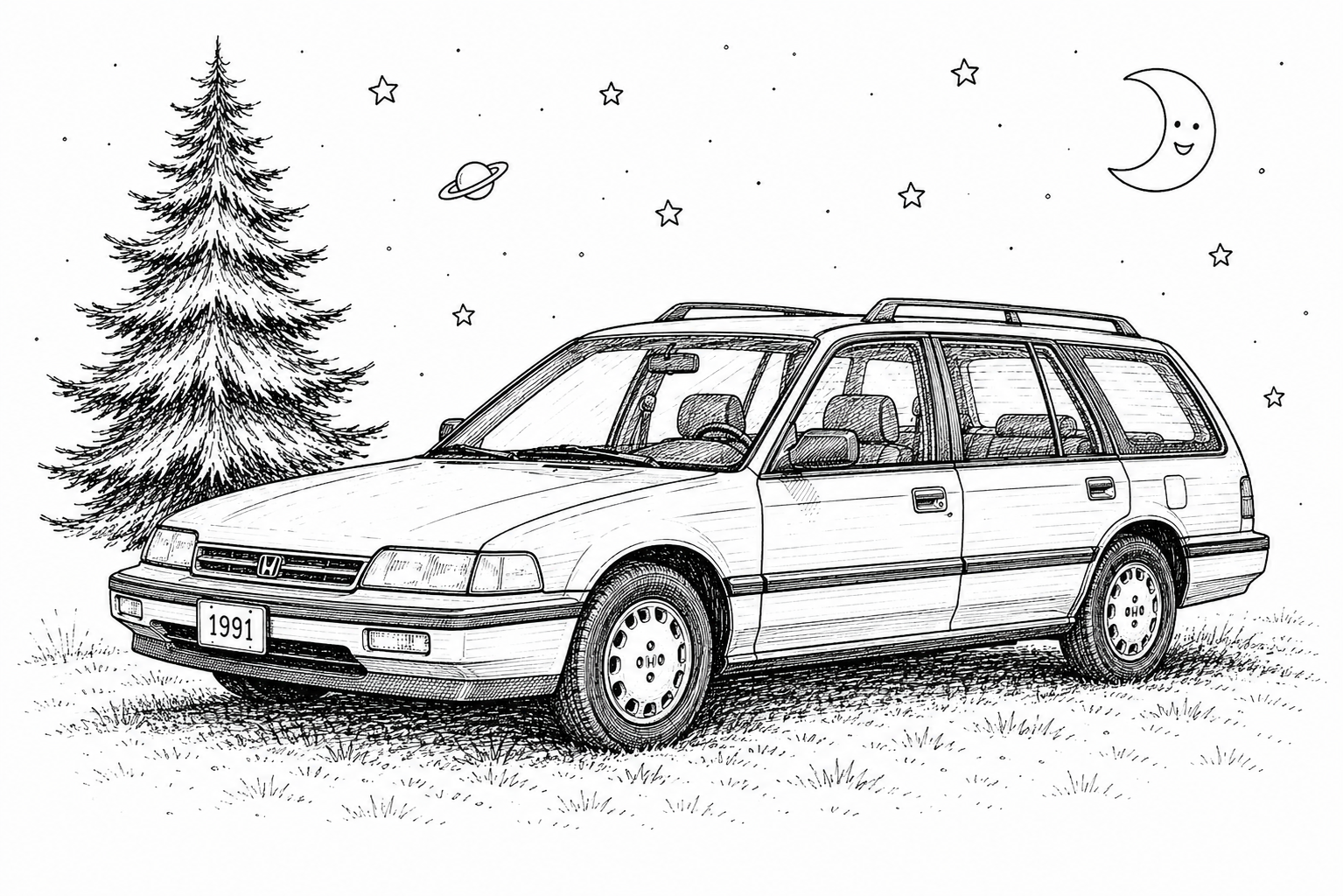
When I was sixteen and working at camp for the first time, I had my blue 1991 Honda station wagon at camp as dad had kicked me out earlier that summer for being a lesbian. While everyone left camp on the last day, I decided to camp out in the back of my car on the athletic field all alone the following night. It was one of the most profound and memorable experiences of my young life.
The other campers and staff would disappear into their lives for the rest of the year, except they did not really disappear from one another. They met every few months, visited each other, and continued friendships that had apparently escaped the boundaries of camp. I tried for years to become part of that world, yet I never met up with anyone. Ever.
Then summer would return, everyone would reunite again, and for a little while I would be physically present inside the same world, yet completely oblivious to whatever happened in their lives since the last summer.
I loved camp enough that I returned year after year and eventually worked there, although loving the place never made it uncomplicated. Whenever I did or said anything as a child, somebody seemed prepared to criticize it, usually a staff member. Eventually comments started appearing on the bathroom walls.
I have always trusted marginalia as a sign that I wrote something worthy.
Perhaps there is something revealing in that, because criticism never bothered me as much as being misunderstood. Someone can dislike what I wrote, disagree with it, or write all over the margins if they wish. At least they read closely enough to object. Indifference leaves considerably less commentary.
The years had only softened the details without diminishing their consequence.
My first year working at camp as a counselor was also one of the worst periods of my young life. I was nineteen, and there were things happening inside me that I did not yet know how to carry. For a period of time, I seriously considered killing myself over how I was being mistreated and at the time had nowhere else to go.
Camp continued that summer, and so did I. Today, a postcard I purchased on eBay arrived in the mail. It shows the living room at summer camp from years ago—the way I always remembered it to be when I was enrolled as a camper.
I have watched enough people, places, communities, relationships, and entire versions of life vanish to understand that permanence is usually something we assign retrospectively to things that merely lasted longer than expected.
I looked at it today and thought about returning. Most likely I will put it in a frame and hang it on my bedroom wall.
I am preparing myself for the eventuality that one day I will not be able to. The property may be sold, the camp may change hands, access may disappear, or the buildings may eventually be forgotten about entirely.
There are reunions that feel like recovering something. Others merely confirm the loss.
I know that returning would also mean confronting the administrative version of me that camp has preserved. The camp still has me under the boy name my father supplied when he enrolled me there. Outside of summer camp and school administration, nobody knew me by that name.
Everyone who actually knew me always referred to me as Emily.
By the time I finally walked into Mach’s, I had apparently contemplated childhood, leadership, institutions, friendship, belonging, memory, bureaucracy, mortality, and the eventual disappearance of places, when the considerably more immediate problem was that I needed groceries.
I bought enough food for about two days and spent $124. Twenty-nine dollars of that was a ribeye steak.
The older woman behind the counter looked at me with what appeared to be confusion. I wondered whether she was trying to reconcile someone comparatively young, with a grocery total that included a twenty-nine-dollar steak and apparently the total caused me no concern whatsoever.
For all I know, she may have been thinking about something completely unrelated. Human beings have an unfortunate habit of assigning elaborate explanations to facial expressions, and I am presumably still human enough to participate in the practice.
For most of my life, I thought belonging was something other people possessed naturally and I somehow failed to understand. I watched groups form around me, friendships continue after I had disappeared from them.
The strange thing is that I never particularly wanted everyone to like me. I wanted to be known, which is considerably different from wanting approval. Being known means someone remembers which details matter and understands why.
Some things matter because they remained, while others matter simply because they happened.
|
Copyright © 1998-2026 Emily Pratt Slatin. All Rights Reserved. About | Archives | Biography | EMD Codes | Notebook | Press Kit | Pronouns.page | RSS Feed | Sitemap | YouTube Made with grit in Middletown Springs, Vermont. |