
She/Her/Hers
Lesbian
|
|
EMILY PRATT SLATIN | About | Press Kit | Notebook | Music Playlist | She/Her/Hers Lesbian |
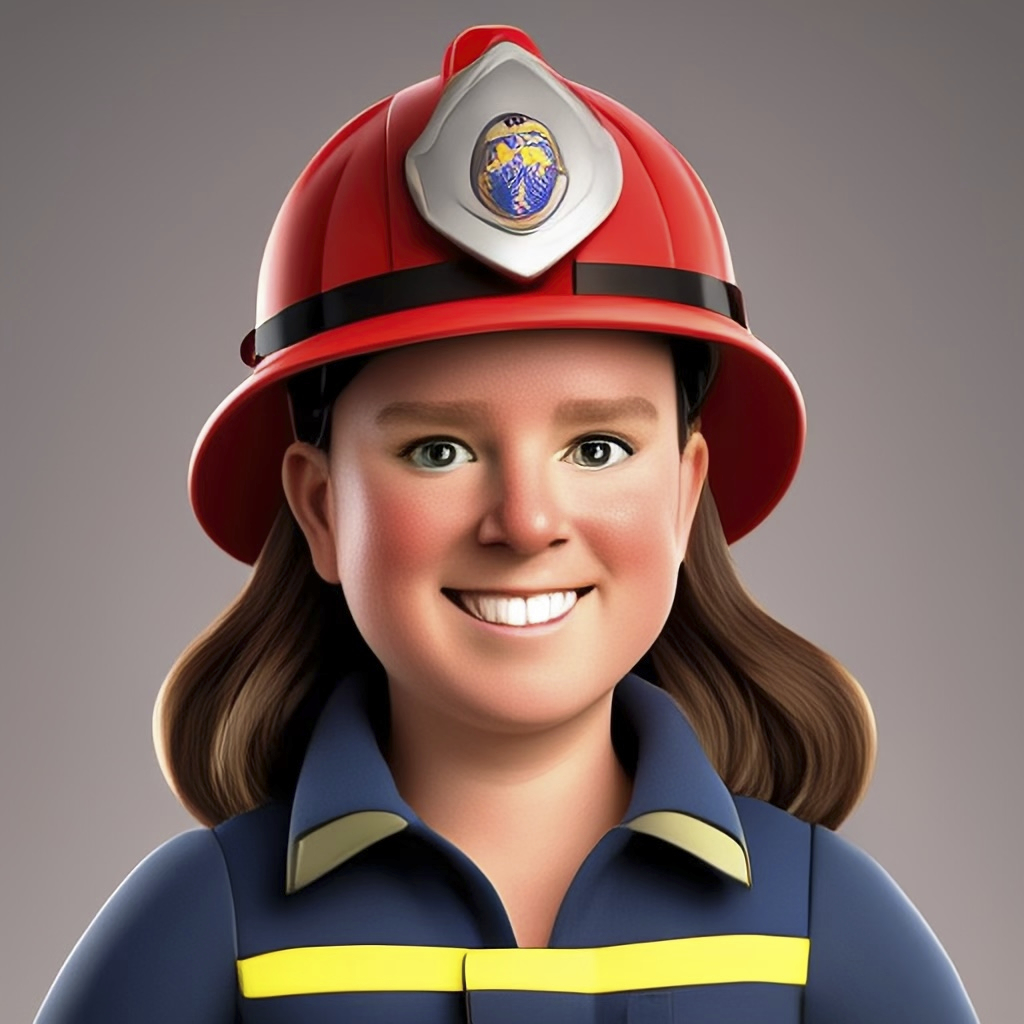
Retired Career Fire and EMS Lieutenant-Specialist, Writer, and Master Photographer, living in Vermont.
September 28, 2026—Stamford, New York (Mom’s House)
Last night, Nora arrived at John’s after walking down the hill from Crescent Avenue in the pouring rain.
I have often wondered how I survived the life I used to lead. Nora has been wondering the same thing herself. She has told me as much. Somehow, despite everything that has happened to both of us, there we were again, sitting together at John’s while the rain came down outside.
Seated at the end of the bar was a man wearing a sports jacket. He asked me my name shortly after I sat down and apparently had known Nora for some time. I casually stated that my name was Emily. The man continued drinking his Miller beer. Every now and then, he would glance over at his lottery bets.
For a couple of hours, I sat between Nora and the old man as the bar remained relatively slow for a Sunday evening.
The man finished another beer and was now beginning to drift into his inebriation. He started complaining about the cost of modern life and how, if only society had listened to Tesla, we could all have free energy.
He then leaned over to me, told me he had a secret, and proceeded to tell me that he was a direct blood descendant of Nikola Tesla. Not sure if I believed this just yet, I casually nodded in agreement as if to say, message received, will deliberate later.
And so I explained to him how physics works, and how Apple uses induction to wirelessly charge devices, which is based on the same general principle of transferring electrical energy without a physical electrical connection. Tesla, however, was proposing doing this on a considerably larger scale. Making something like that work across meaningful distances would require enormous infrastructure, and transmitting electricity wirelessly does not somehow exempt it from the inconvenient realities of energy loss.
Physics, apparently, remained physics even if your great-great-whatever was Nikola Tesla.
His solution was to simply build more transmission stations. I said sure, this might work, but you still have to get the energy from the point of generation to the point of transmission. Wireless was his theoretical approach. I suggested that the stations themselves should be connected with buried cable. He allowed this proposal.
Even then, I said, you are going to need more power to be produced than is actually consumed because of the losses incurred during wireless transmission. Wireless might make sense in situations where physical contact is impractical or inconvenient, such as with a cellular phone or medical device, but as for stationary objects like buildings, it is far easier to continue doing what we already do, which is run copper cable.
You can't go wrong with copper.
“You’re pretty smart,” he said, with the kind of confidence that can only be achieved through the consumption of intoxicants.
He went on to ask where I had gotten my master’s degree in engineering. I said that although I had officially started college at age sixteen, I never graduated from high school or college, and therefore, officially, I have an eighth-grade education. He rolled up the sleeve on his right arm to show me his Christian cross tattoo.
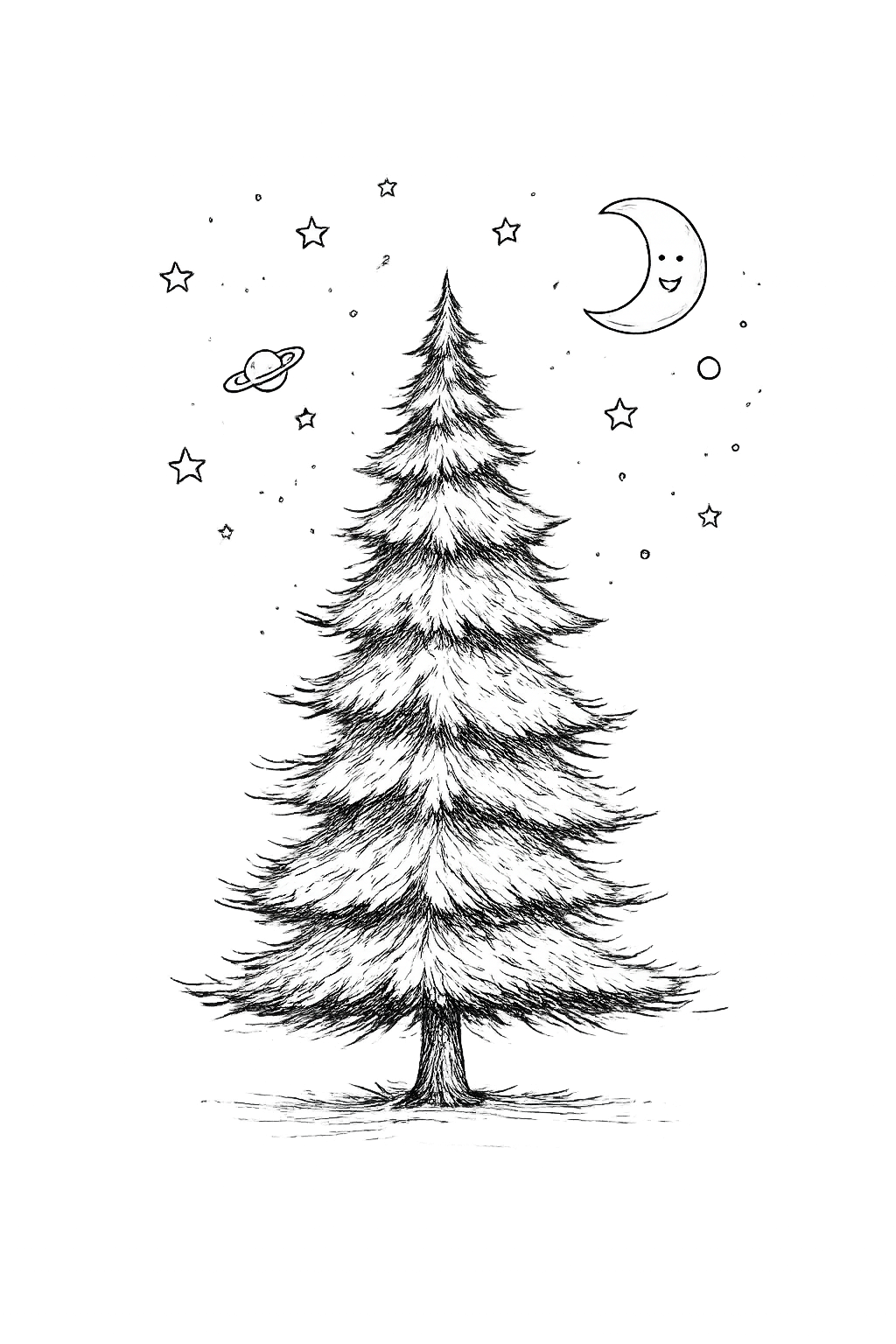
I can explain the pine trees. I can explain Saturn. I can mostly explain the moon. God is considerably more complicated. My relationship with her is one that took me decades to accept and understand.
“Who are you?” he demanded out of nowhere.
When I was born, the doctor handed me to my father and said, this one’s a lesbian—I wish you better luck next time. I would return to the same hospital for the next month while they figured out which sex to assign me at birth. Eventually, they settled on female. Apparently Dad wasn’t satisfied and was only annoyed further by the lack of a returns policy.
I made reference to Exhibit A, wherein I had introduced myself as Emily, and pointed out that this was now the third time I had reminded him of my name within a two-hour period.
“Emily.”
He repeated my name a few times, unknowingly creating what sounded like an echo as each repetition became slightly quieter than the one before it.
I had achieved mythic status at John’s Tavern.
The man glanced over at me. I gave him a polite, closed smile.
“People sometimes refer to me here as Crazy Emily.”
He stood up from the bar. “There is absolutely no fucking way that you are Emily Slatin.”
John’s Tavern has about as much lighting as a Hollister clothing store.
I showed him my pine tree tattoo with the pink and purple stars, the smiling moon, and the oversized Saturn that had apparently stopped by to hang out.
“A Christmas tree and a moon and Saturn.”
He still didn’t believe me.
I decided to prove it even though doing so was futile. I called over Santo, the owner of the bar, who confirmed that I was, indeed, the actual Emily Pratt Slatin, daughter of Anne and Harvey.
The man sat back down. This would be short-lived.
I went on to tell him that I grew up across the street at the corner of Main and Academy streets. I pointed to Mom’s house out the front window of John’s Tavern. The volume of his voice increased suddenly, prompting Nora to confirm my claim that I was telling the truth. For some reason, this man still considered me an outsider.
He immediately jumped up from his bar stool like a rocket ship taking off, only to suddenly require the assistance of the stool as soon as he was standing.
“You expect me to believe that you are Emily Slatin. You… I knew Harvey, and there’s no way he would have allowed his own daughter to be a lesbian. There’s no way.”
I disliked him immediately, which saved us both considerable time.
He stormed out the door.
“Idiot!” Santo shouted as soon as the door slammed shut and he was sufficiently outside.
Santo refilled my Coke at no charge.
This had never happened before.
A little after ten, Nora and I made our way back to Mom’s house. I made my bed. We started talking about the old man at the bar and the absurdity of having someone at John’s dismiss my claim of being Emily Slatin in the same town where I grew up, despite numerous witnesses confirming that I was telling the truth.
I told her the story of how, at age sixteen, I had finally admitted to my father that I was a lesbian. Dad demanded to go with me to the doctor’s office for my annual checkup instead of Mom. I reluctantly agreed. I didn’t really have any say in the matter regardless.
“Thomas here claims to be a girl and just came out as a homosexual.”
The doctor called in another doctor from the practice.
Everyone in my life knew me as Emily, except for all the instances where Dad’s influence was enough to define my identity on a bureaucratic level.
The two doctors sat across the table from me and my father. It was then that they told me the truth in front of my father—I was genetically female. They still had no idea why I was born with a penis. I was again offered “corrective surgery,” which I rejected immediately.
The doctors warned me that without the surgery, dating would be difficult. I would have trouble fitting in. People would think my body was weird.
Dad proclaimed that we were all insane and needed to be institutionalized. He then picked up a chair and hurled it at the wall of the doctor’s office.
None of my female friends believed I had a penis. This remained true even after seeing me in bathing suits and inevitably, my panties, which I had assumed would constitute reasonably compelling circumstantial evidence. Apparently, it did not. They insisted they couldn’t tell.
Eventually, at age twenty, I reluctantly pulled my pants down to prove it. There are very few arguments in life that can be resolved conclusively by removing your pants. This happened to be one of them. She was a friend. Unfortunately, she was also my boss’s daughter. She wanted to know whether it was real and whether it worked. We checked yes to both questions.
This is how I lost my virginity.
All things considered, I feel like it went really well.
Mom’s house feels exactly the same way it always did. In some ways, the house itself feels like it took my side a lot of the time. I had planned to stay just long enough to know that I needed to leave before it started feeling like home.
This morning, I woke up at eight, then sat in my chair and put Noah Gundersen’s Heavy Metals on the stereo.
Matt Popp picked me up from Mom's at two in the afternoon. I've known Matt Popp literally my entire life. We grew up together. I even sat next to his wife starting in grade three. Just in case, I brought government identification, a utility bill that I forgot to throw away, and Nora's home phone number to call if I needed someone to vouch for my identity. Amanda has met Nora only briefly, one time. That should be adequate proof.
Matt drove me to Cobleskill so that we could establish a business checking account for the LLC.
The bank representative asked me why people around town called me Crazy Emily. Whenever I came into the bank, she said, I was always calm, polite, and friendly, and I was one of their favorite customers. She was actually offended that people called me crazy.
If you say Emily Slatin around town, nobody knows who the hell you’re talking about. If you say Crazy Emily, everyone immediately says, “Oh, the Slatin’s daughter. Of course.”
I hopped freight trains, ran down Main Street in Stamford naked several times, and slept with a married woman. The woman’s husband had quite a lot to say about the situation. Unfortunately, I didn’t catch most of it because I was running to my car at the time.
I’ve put the area through a lot over the years.
I felt so bad.
|
Copyright © 1998-2026 Emily Pratt Slatin. All Rights Reserved. About | Archives | Biography | EMD Codes | Notebook | Press Kit | Pronouns.page | RSS Feed | Sitemap | YouTube Made with grit in Middletown Springs, Vermont. |