
She/Her/Hers
Lesbian
|
|
EMILY PRATT SLATIN | About | Press Kit | Notebook | Music Playlist | She/Her/Hers Lesbian |
Retired Career Fire and EMS Lieutenant-Specialist, Writer, and Master Photographer, living in Vermont.

January 24, 2026—Middletown Springs, Vermont (Home)
I grew up assuming that staying was a kind of contract. That if you remained in a place long enough—paid attention, learned its rhythms, caused no trouble—it would hold you in return. Not sentimentally. Practically. The way someone learns where to settle long enough to know how a house sounds just after midnight, when the heat kicks on and no one else is awake. I believed belonging was cumulative, something you earned by presence and time, by knowing when to speak and when to stay quiet, by learning how not to be a problem.
The town helped raise me. People say that about places like this, usually with pride, usually as a way of claiming responsibility without having to examine it too closely. For a long time, I said it too. It felt accurate enough. I knew the roads. I knew which adults watched me carefully and which ones decided early that I would be fine on my own. I learned quickly how to be readable without being loud, competent without being threatening. That was the deal, as far as I could tell.
I was the autistic, intersex, queer girl, though no one used those words out loud—not then—everyone who knew me called me Emily. Difference was handled indirectly. You were categorized by behavior, not identity. I was quiet. Observant. Capable. Smart in ways that made adults comfortable as long as I did not demand too much attention or care. I learned early that being low-maintenance was a form of safety. I learned how to make myself easy to manage.
We moved there for a reason that was never framed as one. In third grade, my pediatrician asked me if I was a boy or a girl. I said girl. There was no hesitation. No confusion. It was not a moment I experienced as revelatory. It was simply an answer.
What came next was unexpected. The doctors treated this as confirmation that it was time for what they called a "little operation." They spoke in diminutives, as if scale could soften intent. It took me a moment to realize they were proposing the immediate, planned, surgical removal of my penis. When I did, I started screaming. I did not stop until I was sent to my bedroom.
My father came home early that afternoon. He quit his job shortly after. We moved into what was supposed to be our summer house. He blamed me for having to move.
No one explained the connection, but none was required. The sequence was clear enough. A question was asked. I answered it honestly. The ground shifted.
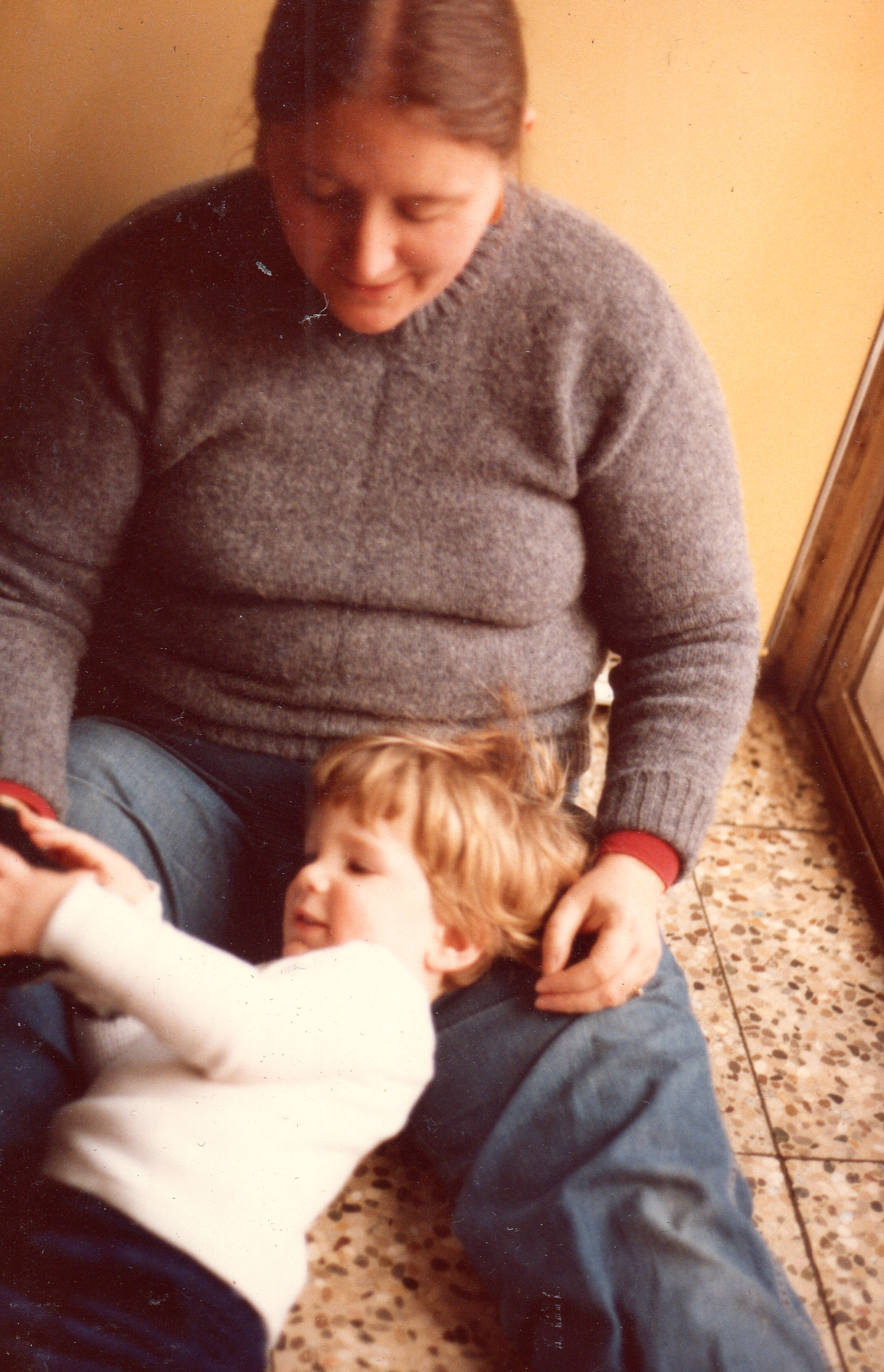
I did not understand then that this would be the first in a long series of medical interventions I would be expected to defend my body against. Each one was framed as urgent—either a medical necessity or a social emergency—neither of which matched my lived reality. Nothing felt broken to me. Nothing felt unresolved. I did not need to be fixed or redirected. I wanted what I had already been doing without incident: to be left alone to grow up as a girl, the way my mother had raised me from the beginning.
There was never a single moment where I was told I did not belong. That would have been honest. Instead, I was slowly raised and educated elsewhere.
First came summer camp at age eleven—far from home. It was framed as normal, wholesome, good for me. It removed me from the town in a way that required no explanation. Absence, when it is seasonal and sanctioned, does not count as loss. It counts as growth. Whatever I became there did not need to be reconciled locally. I could return sunburned and quieter, changed just enough to be praised, not enough to be questioned.
After eighth grade at age fourteen came boarding school. Again, it was described as opportunity. Advancement. Something privileged and earned. I learned how to accept it with gratitude, even as I noticed how efficiently it removed me from the daily life of the place that claimed to have raised me. The town did not push me out. It simply redirected me. That distinction matters. Redirecting allows those around me to still feel reasonable.
At sixteen, I was kicked out with nowhere to go. Doctors had finally told me I was intersex and XX female. They spoke carefully, as if delivering bad news, as if being labeled female required consolation. By then it was blatantly obvious what was happening. I had already started growing breasts, and had my first period a few summers earlier. I told the doctors I had identified as a female my entire life, and that I had been socialized as such. I had previously told my parents that I was bisexual to try and soften the inevitable reality that I was actually a lesbian. I told everyone I I knew that I was gay. Nobody seemed even remotely surprised.
I still had to return for boarding school. Home was withdrawn, but obligation remained intact. I learned then that belonging and usefulness are separate categories, and that you can be discarded personally while still being required institutionally. I showed up. I performed. I did not make trouble. I learned how to function without being held. I ran away in my senior year after I turned eighteen. The school demanded me to walk down the aisle at graduation but when I was handed my diploma, it was a blank sheet of paper.
By the time college arrived, distance no longer felt accidental. West Virginia was not nearby. It was not intended to be. My life would continue to happen elsewhere. Staying was never the goal. Leaving had become the imposed structure. I stopped expecting continuity. I learned how to live out of suitcases and duffel bags, build myself in pieces, and carry them with me.
None of this was described as exile. That is important. Each move could be justified on its own. Each decision made sense if you refused to look at them in sequence. But sequence is where meaning lives. Proximity was withdrawn at every moment when staying would have required reckoning—when I would have needed to be fully seen, fully integrated, fully accounted for.
I grew up anyway. I did well. Better than expected, according to some. I became successful in ways people like to reference, beautiful in ways they feel comfortable commenting on from a distance. I did not disappear. I did not break down publicly. I did not return asking to be saved. I came back intact. That was the problem.
Small towns that have a population of two thousand people know how to support wounded children. They later struggle with adult women who no longer require supervision, gratitude, or containment. Survival is acceptable. Self-possession is destabilizing. I had outgrown the version of myself the town knew how to contain.
When mom died and it came time to keep my mother's house—to remain tethered in a way that was practical, grounded, undeniable—the answer was already written. The town had practiced my absence for decades. Letting me go was not new. It was simply the final step.
People keep telling me it is just a house. That houses come and go. That I should be pragmatic. They misunderstand what houses mean in places like this. Houses are proof. They are permission. They are evidence that you were meant to come back and stay.
I did come back. I just came back whole. This is not about blame. It is a story about how a girl can be raised by a place and still never be offered continuity once she becomes too autonomous to manage up close. About how exile does not always arrive as rejection—sometimes it arrives as opportunity, as distance, as a series of reasonable decisions that add up to removal.
There were people I called friends. I had a crush on one of my female friends for years, and she never knew. That feels important to say plainly, without quotation marks or revision. At the time, I meant it. We shared classrooms, summers, hallways, summer vacations, and inside jokes that made sense only because we were young and standing in the same places at the same time. We knew one another's rhythms well enough to recognize footsteps, moods, silences. I assumed that counted for something durable.
Some of my friends left early. When I was sent away, they faded cleanly. No rupture, no confrontation, no final conversation. Just absence. I did not hear from them again. Not later. Not eventually. They did not follow the thread forward. I learned, without being told, that certain relationships are built only for proximity. Once distance enters, they dissolve without protest.
Others stayed. These are the ones who confuse me more. They remained in the town. Built lives there. Married people whose names I had known decades earlier, only to find out years later, if at all. A few of my friends had children who grew up entirely outside my awareness, and became fully formed adults by the time I heard about them. They speak about these lives casually now, as if the continuity were obvious, as if I had simply been standing slightly off to the side the whole time.
They are surprised by my surprise. They tell me about their children—college graduates, parents themselves sometimes—and pause when I do not immediately know where to place that information. They mention a spouse they married twenty years ago and wait for an immediate recognition that does not come. There is a brief moment where something does not line up, and then they smooth it over, as if the misunderstanding is minor and on me.
What they do not understand is that these omissions are not details. They are evidence. Decades passed without a single phone call, letter, message, or update. Entire lives unfolded without intersecting mine in any meaningful way. And yet, when we speak now, there is an expectation of familiarity, of shared history still intact, as if time simply paused in my absence and resumed when I returned.
I am not offended. That would suggest I expected something else. What I feel instead is dislocation—the recognition that I was never inside the version of friendship they were maintaining. I was preserved as a memory, not a participant. Someone from before. Someone optional.
They lived parallel lives that did not require my presence, and I learned about them only retroactively, as if being briefed on a completed project. The surprise on their faces when I admit I did not know is almost genuine. It seems not to occur to them that staying in one place creates a different kind of continuity—one that quietly excludes those who were educated away from it.
This is the part no one names when they talk about people, "growing apart." That phrase implies mutual drift, equal distance, shared forgetting. What actually happened was asymmetrical. Their lives continued in a tight radius. Mine was routed outward. Information flowed one way, if at all.
Friendship, it turns out, was also conditional on proximity. I do not fault them for building lives. That would be absurd. I fault the assumption that I should somehow have remained adjacent to them without access, without invitation, without updates—like a background character expected to recognize plot developments I was never ever written into.
When they speak now, there is often a faint confusion underneath the conversation, a sense that I am not responding correctly. I am warmer than a stranger, but far less informed than a friend. I occupy an in-between space they never had to define because it only exists for people who leave and still remember. I remember everything.
This is what exile looks like at the interpersonal level. Not cruelty. Not rejection. Just long stretches of unacknowledged absence, punctuated by moments where the distance briefly becomes visible and no one quite knows what to do with it.
I am expected to understand their lives as continuations. They do not understand mine as a series of enforced departures.
Summer camp and boarding school were presented as different experiences. One was seasonal, the other academic. One was supposed to be carefree, the other rigorous. In practice, the outcome was identical. Both removed me from home for vast stretches of time. Both taught me how to adapt quickly, perform acceptably, and disappear without protest. Both reinforced the idea that my life would be managed at a distance.
The environments differed. The function did not. At camp, I learned how to read a room and adjust before being corrected. At boarding school, I refined the skill. Neither place was interested in who I was becoming. They were interested in whether I could comply, blend, and succeed quietly. I did. That competence was noted. It was never mistaken for belonging.
What makes this harder to name—and impossible to separate from the larger pattern—is that my father intentionally enrolled me as a boy in both institutions. This was not confusion. It was not a bureaucratic error. It was a decision. His, and his alone.
I was required to perform a role that had never belonged to me, in institutions that rewarded obedience and punished deviation efficiently and without spectacle. I learned how to hold myself carefully, how to manage presentation, how to endure the dissonance without comment. Survival required precision. I supplied it.
That role followed me everywhere those institutions reached. Camp. School. Paperwork. Introductions. The occasional confused look in a therapist's office. I became practiced at living inside a fiction that other people insisted was real. Correcting it was not an option. Refusing it was not possible. I did what I had already learned to do well—I endured.
This was not a temporary inconvenience. It was a structural condition of my childhood and adolescence. One more way proximity was made unsafe. One more reason distance was framed as opportunity. Being away allowed the role to persist without challenge. It insulated the decision from scrutiny.
I did not become free of that imposed identity until I was legally free of my father's estate. That sentence still surprises people. It shouldn't. Control does not always end with death. Sometimes it lingers in documents, in estates, in expectations, in the quiet understanding that certain truths remain inconvenient until all administrative authority has been exhausted and the courts surrender. My autonomy arrived not with adulthood, but with clearance.
Looking back, it becomes difficult to argue that summer camp and boarding school were neutral experiences. They functioned as containment. They enforced a version of me that was never mine while training me to tolerate erasure as long as it was orderly.
This is why the pattern matters. Distance did not protect me from harm. It made the harm easier to maintain. It kept the story clean. It allowed adults to feel reasonable while a child learned how to split herself for survival.
When I say I was educated elsewhere, I do not only mean geographically. I mean I was taught—systematically—that who I was could be overridden, that compliance would be rewarded, and that safety came from not insisting on being seen.
That lesson worked. Too well. By the time all of this was underway, my family was already gone. Not dramatically. Not in a single argument or rupture that could be pointed to later. They peeled away over time, quietly, until there was no one left to account for. Distance handled what confrontation did not. Silence did the rest. Decades passed without repair, explanation, or interest in return.
My mother was the exception. She was the only constant in a system that specialized in removal. When everyone else stepped back, she stayed. When proximity became inconvenient, she did not outsource it. She did not reroute me, or recategorize me, or explain my absence as growth. She remained present in ways that did not require interpretation.
That matters more than people realize. She did not always understand me perfectly, but she did not withdraw. She did not require me to be smaller, quieter, or easier to manage in order to keep her place in my life. Whatever the rest of the family decided to relinquish, she held.
Which is why the house was never just a house. It was the last physical expression of someone choosing to stay.
When the rest of my family abandoned the work of knowing me, she did not. When distance became fashionable, she did not participate. When silence would have been simpler, she kept a line open. The house carried that continuity forward after she was gone. It was proof that at least one relationship in my life had not been conditional on convenience.
Losing it is not about nostalgia. It is about the final confirmation of a pattern I have been documenting this entire time. Everyone else left early. The town practiced my absence. Friends became ghostly silhouettes of memories. Institutions managed me at a distance. And my mother stayed and protected me as best she could.
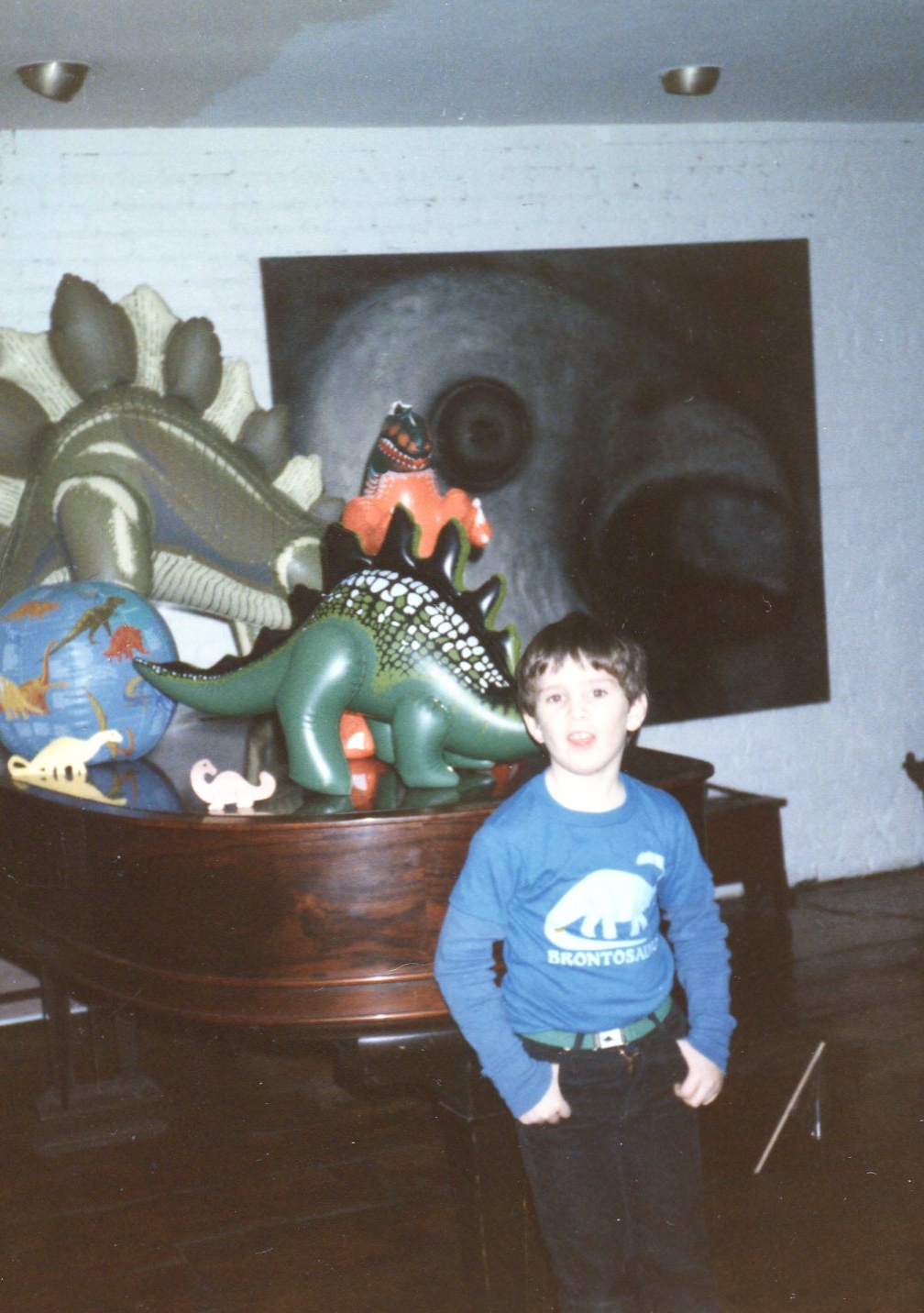
She was not perfect. That is not the point. She was present. And in a life structured around being sent elsewhere, that presence mattered enough to anchor everything that came after. Letting go of the house feels like the last piece of that being dismantled—not because I need it to survive, but because it represented something that was otherwise rare. A place that did not require me to perform, explain, or adapt in order to remain.
I am not grieving a building. I am acknowledging that the only person who ever truly held ground for me is no longer here to do it. Everything else I learned to live without. That is why this ending is clean.
The town did not betray me suddenly. My family did not disappear all at once. I was trained early to live without permanence, without continuity, and often without return. My mother was the one remaining interruption in that pattern. The house was the echo of her choice to stay.
Now that is gone too, and I am still standing. That has never been the question. The question was whether staying was ever real, or just something I believed in because she made it so for as long as she could. Knowing the answer does not undo anything. It simply completes the record.
I am letting go of the house now. Not dramatically. Not angrily. With the same clarity I learned early on. The contract I thought I was honoring was never mutual. Staying was something I believed in, not something that was ever fully extended to me.
Knowing that changes nothing about who I am. It just explains why leaving feels so familiar.
|
Copyright © 1998-2026 Emily Pratt Slatin. All Rights Reserved. About | Archives | Biography | EMD Codes | Notebook | Press Kit | Pronouns.page | RSS Feed | Sitemap | YouTube Made with grit in Middletown Springs, Vermont. |