
She/Her/Hers
Lesbian
|
|
EMILY PRATT SLATIN | About | Press Kit | Notebook | Music Playlist | She/Her/Hers Lesbian |
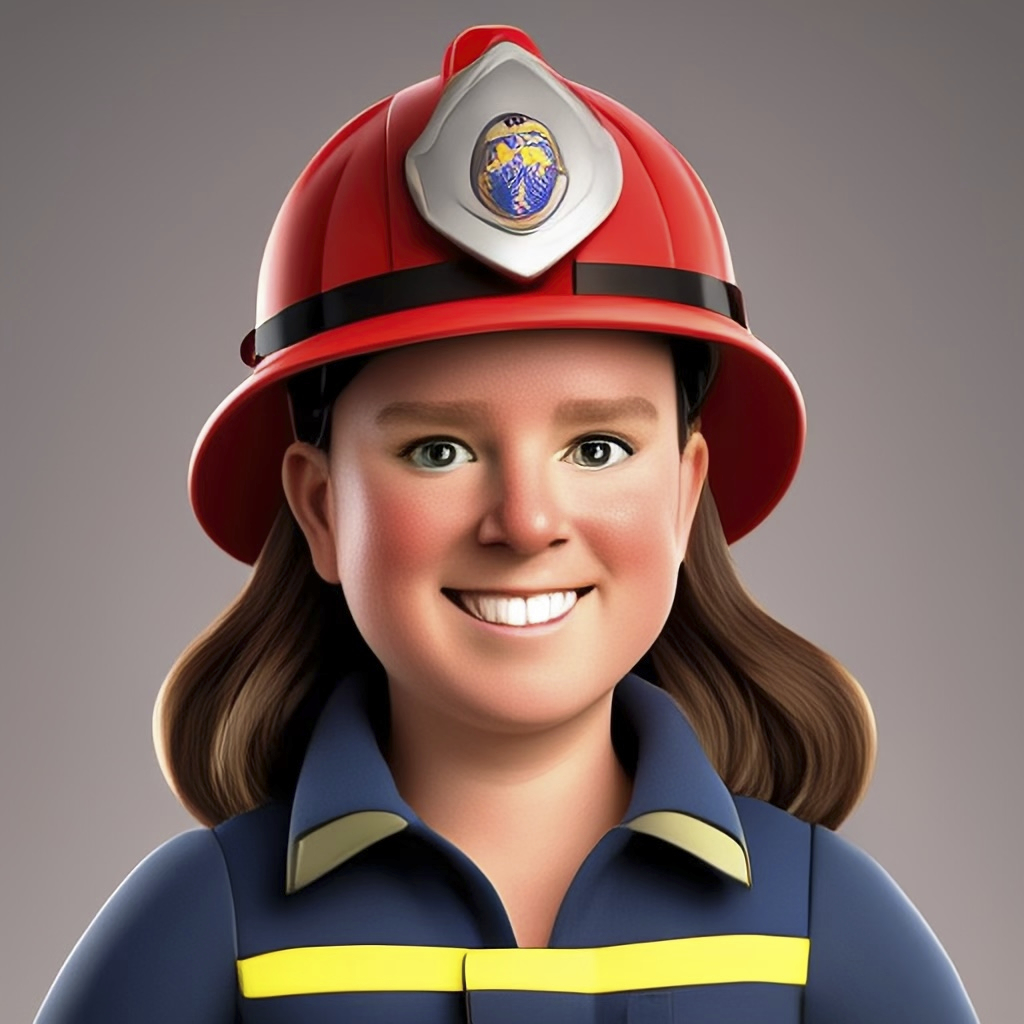
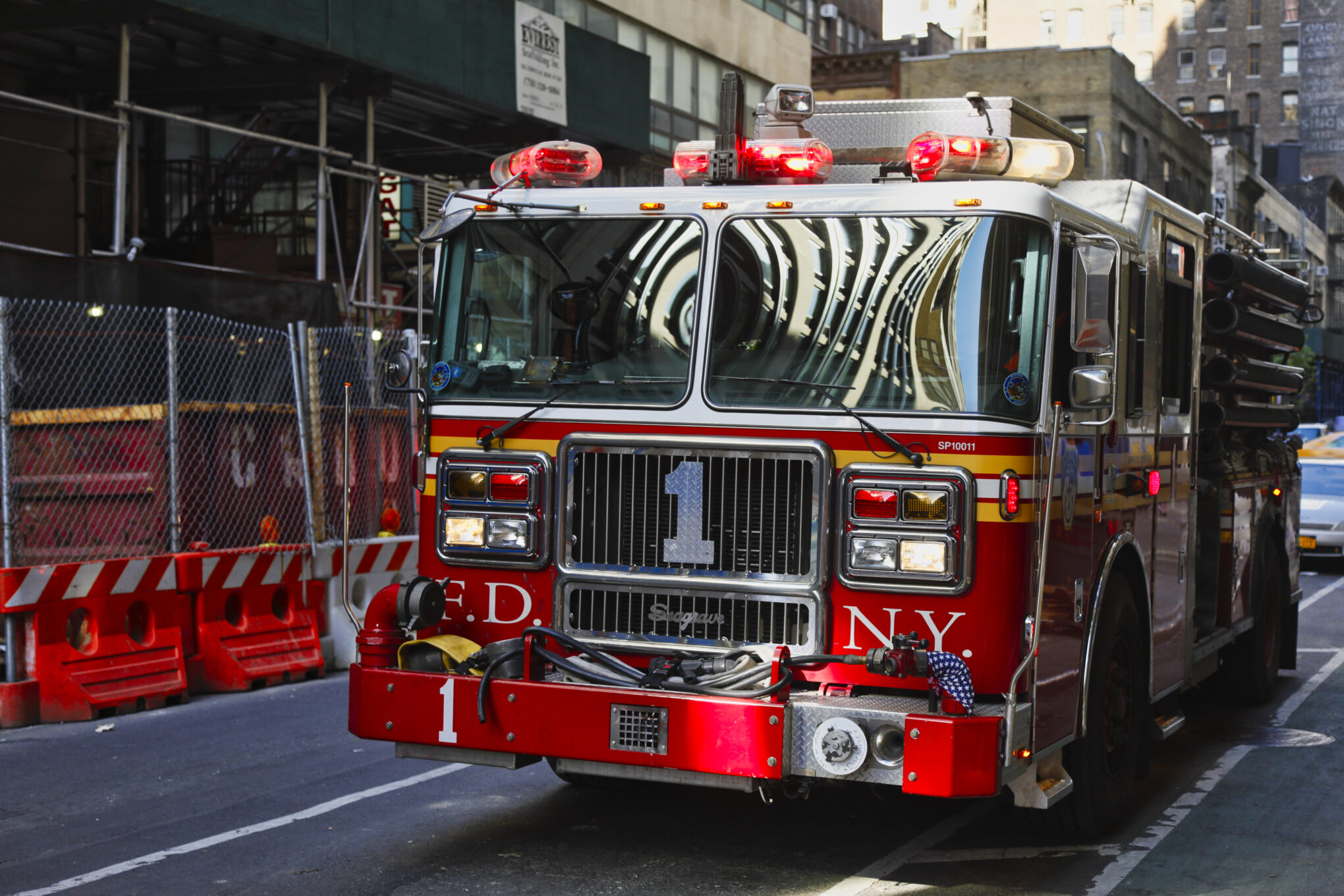
Retired Career Fire and EMS Lieutenant-Specialist, Writer, and Master Photographer, living in Vermont.
May 15, 2026—Middletown Springs, Vermont (Home)
This morning I woke up thinking about the rest of my life, which is a ridiculous thing to think about before coffee, but apparently my brain has never respected standardized operating procedures. It came in before the light fully reached the room, before the house had finished making all of its small morning noises, before I had any business being philosophical.
I sat up for a short time, staring out the window at the Japanese maple in the front yard, not moving, letting the thought sit beside me without answering it. The rest of my life.
I am forty-six years old, and I have somehow arrived at a point in life that feels both impossibly early and impossibly late. Too young, by most standards, to talk about retirement without someone tilting their head and asking how it's even possible. Too old, by my own internal count, to pretend I am still at the beginning of anything.
I have lived too much life in too little time. That is the simplest way I can say it without turning it into melodrama. I compressed an entire lifetime into less than half a century, and now I am standing in the quiet aftermath, unsure whether this is what people mean when they talk about being done.
Done with what, exactly? The job is done. The uniform is done. The firehouse life is done. The version of me who knew how to move through smoke, death, broken metal, bad weather, bad lighting, and worse news is still somewhere in me, but she no longer runs the day-to-day operations. But she is no longer being called out into the night to deal with the world's worst moments as a matter of employment. Such experiences fundamentally change the shape of time.
Mom is gone. That sentence still feels like something I am reporting instead of something I believe. She outlived my father by well over a decade, long enough for me to think, in some irrational corner of my mind, that she might simply continue. Not forever, exactly, but longer. Some people become so woven into the origins of your life that mortality begins to feel like an administrative impossibility. Parents are not immortal, but they can be foundational. Mom was such a parent. We were friends since the day I was born—we could be angry with each other, call each other every name in the book, disagree, and yet still remain friends. We bonded deeply in the handful of years when Amelia came into my life.
What finally took her was not old age in the broad, softened way people like to say it. It was not a clean decline, not a neat and dignified fading from one stage of life into another. It was numerous complications from a botched knee replacement surgery. She had been warned of the risks. Not once. Not casually. Numerous specialists had told her that her risk factors were astronomical. They said it clearly, repeatedly, with the kind of cautious medical language that is supposed to make people pause. She pressured them into doing the surgery anyway, and they eventually did it.
I do not know where to put my anger about that. Some days I place it with the doctors, because perhaps they should have known better. Some days I place it with her, because she was warned and did not listen. Most days I do not know where to place it.
I understand why she wanted it. That is the cruel part. I understand wanting one more chance at mobility, one more correction, one more fix that might make life smaller in its suffering. I understand the logic of a person who has spent too long being trapped inside a body that no longer cooperates the way you want it to.
But I also understand risk. I understand consequence. I understand the thin membrane between routine and catastrophic. Years in EMS taught me that ordinary things can turn fatal without warning. A surgery. A clot. Pneumonia. A decision made because the alternative feels intolerable. The world likes to separate tragedy from choice because it makes everyone feel safer, but life rarely does us the courtesy of staying that simple.
After she died, something in the structure of my life gave way. Not all at once. Not dramatically. I moved even deeper into the life I had already started in Vermont. I stopped trying to negotiate with the old roles. Daughter. Lieutenant. Caregiver. Problem solver. The one who stays. The one who carries. The one who answers. The one who comes up with a plan when everyone else is staring at the ceiling.
There are only so many times a person can be useful before usefulness starts impersonating identity. I became incredibly sarcastic when I became a lieutenant. I remember being genuinely disappointed when the local paper failed to quote me correctly after an accident scene. They asked if I could explain what happened. I said, "Sure. Someone fucked up."
I once told a newspaper reporter that two people decided to ignore stop signs at an intersection at the same time, and because of this, the cars tried to occupy the same spot at the same time, and predictably, it didn't work out. The stripped down version of this account was printed.
I have been thinking lately about what I want for the rest of my life, and the honest answer is still that I do not know. The question is not what must be done next. The question is what I actually want, and I am not sure I have ever been asked that without an emergency standing behind it.
Maybe this is retirement. Maybe it is not. Retirement was sold to me as golf carts, pensions, card tables, cruise brochures, and cheerful people who spent thirty years doing something stable enough to leave with cake in the break room.
I am still entering a new era of my life, but it does not have a name yet. That may be the point. Names have never protected me as much as people think they do. Sometimes a name is a shelter, and sometimes it is a box. I have had enough boxes. People love talking about thinking outside the box. I have become increasingly suspicious of the box itself.
I am still waiting to hear back from my old summer camp. It will be interesting to see if I get invited back. I am not going there because I need the social background of a reunion, or a circle of people remembering me correctly, or a name tag and a sandwich under a tent. I do not need applause from anyone who last knew me as a child under false pretenses.
What I need is closure, and closure is not the same thing as approval. Approval asks to be chosen. Closure asks to place the truth where it belongs, and leave without dragging it behind you.
If the people I used to know no longer respect me, then I will know for sure. I am under no obligation to stay, and I am under no obligation to return. The freedom I spent a lifetime fighting for includes the freedom to leave places that cannot hold the woman I became.
People do not always understand that kind of freedom. They resent it, sometimes. I see it in little comments, in pauses, in the thin smile people make when they ask what I am doing tomorrow and I say not sure yet. They have to make plans around work, school calendars, other people's availability, obligations stacked so high that their own time becomes something they rent back in pieces. I know what that is like. I lived inside those systems for years. With enough determination, and the right life choices, I eventually fought my way out. I paid for my autonomy in ways most people will never see and would not believe if I told them.
What am I doing tomorrow? I'm not sure yet. I guess when tomorrow comes, then I will know for sure. That sentence feels more honest than any five-year plan I ever made.
I think it is time I restore Mom's house. Repair is mechanical. Restoration is emotional, historical, and occasionally expensive in ways that make you question whether old houses were designed by people who hated heirs. Amelia and I have plans to meet with people I have known all my life, people we have agreed to hire because they understand the house as more than a structure with aging systems and questionable decisions hidden behind walls. They know the place. They know the town. They know the history my mom and I had there, and why moms house means so much to me.
Amelia and I are going to continue living here at the farm. The farm is home now, in the plainest and most durable sense of the word. It is where the pines stand, where the wind moves through the fields, where the house makes its small noises, where the quiet has finally become something I no longer need to outrun.
Keeping the farm running matters to me, even if all it produces is scenery and the kind of life I thought existed only in my imagination. A place must not be expected to generate profit, crops, inventory, public usefulness, or some kind of measurable output in order to justify its existence.
The farm produces the mornings you want to wake up to. It produces long, quiet summer days. It produces the exact kind of life I used to believe belonged to other people. Evening brings big open-sky Vermont sunsets, followed by a bright night sky to hang the stars upon. I finally have what I always wanted. A place to live, and two best friends. That is such a small sentence for something that took almost half a century to obtain.
Amelia is my wife, and also my best friend. She is the person who came into my life through writing, of all things, through a #WritersLift on Twitter in 2020, which still feels absurd enough to be true. Of all the wild places I have found people—firehouses, train tracks, abandoned buildings, hospital rooms, camp docks, diners in towns that barely survived the 1990s—I found my wife through writers on the internet throwing their work into the void and hoping someone decent would notice.
Maybe Allen Ginsberg was right after all. I have been thinking about that lately, too. He once said I would devote my life to writing and photography. Dad dismissed it as nonsense, as a distraction from what I should have been focusing on, which according to him was becoming a surgeon.
My father loved prescribed futures. He loved credentials, titles, institutional validation, and anything that could be framed as respectable in a room full of people who cared too much about how things sounded. Allen, who was friends with my father, told me I should think about writing and photography anyway. He jokingly said maybe it would help me meet girls.
Come to think of it, it did. That memory feels almost irritating now in its accuracy. My father wanted me to become a surgeon. Allen saw the writer and photographer before I fully understood that those were not hobbies, but native passions. I did not become a surgeon. I became someone who spent twenty-two years in and around bodies, blood, urgency, death, and damage, and then came home and tried to make language out of what remained. Maybe the outcome was not as far from the prediction as my father would have liked to believe.
Then there is Maddie. I met her through a mutual friend. The three of us were exploring abandoned buildings, walking through lost places the way certain minds do—not for trespass as much as curiosity, not for danger as much as the irresistible pull of forgotten systems.
Maddie and I bonded immediately. It still surprises me, even now. I have met intelligent people before. I have met emotionally mature people before. I have met people who could discuss complicated subjects without blinking, and people who could hold difficult emotional material without making it about themselves. Rarely, however, have I met someone who could do both at the same time, and almost never someone twenty years younger than me.
It was unbelievable to me that someone could be at my level intellectually, and at the same time meet me in terms of emotional maturity. Not close enough to flatter me. Not performatively clever. Actually there. I do not know if she truly realizes how refreshing it is to have a friend like that, someone who has become a central point in our lives without ever demanding to be made central.
The curious thing about the relationships that matter most is that they rarely arrive carrying a banner. They arrive in the middle of some ordinary absurdity and quietly alter the trajectory of your life.
Maddie has proven herself to be the absolute greatest friendship I have ever experienced in my entire life. I do not write that lightly. I have had friends. I have had people I loved. I have had people I promised I would be there for no matter what. That was always my vow. I would be there. I would answer. I would show up. I would remain present even when things became difficult. I would not abandon people the way I had been abandoned.
Everyone abandoned me. Maddie stayed. She stayed in the way that matters, not with declarations, not with speeches, not with theatrical loyalty, but through continuity. She stayed in the quiet, practical, ordinary way that is impossible to find. And yet Maddie and Amelia are the only friends I have who have never asked anything of me.
So many people have loved me as a function. They loved what I could do, what I could fix, what I knew, what I carried, what I survived, what access I provided, what stability I represented, what emergency version of myself I could become when they needed someone with a calm voice and a working plan. People mistake dependence for love all the time. They do not always mean to. Some of them even believe they are being sincere. But usefulness has a way of wearing affection's clothing until the bill comes due.
Amelia and Maddie never did that. They have never treated my existence like something to extract from. They are the two people in my life who make me feel wanted rather than required, and I have lived long enough to stop pretending the distinction is small.
I see Maddie as a younger sister. She is family in the chosen sense, but also in the practical sense—the kind of person whose presence becomes a welcome and essential part of your life. Amelia and I speak of her naturally now. Her name belongs in the house. Her friendship has become one of the fixed points around which this new era is arranging itself. I do not think she understands how much that means to someone like me, someone who has spent most of her life being present at the beginning of things and absent from what lasted.
I am finally learning that the rest of my life does not need to be organized around proving I survived the first part. That is new. Or maybe it is not new, so much as I am only now quiet enough to hear it.
The farm is quiet today. The rain passed across the fields all morning. Somewhere outside, the pines hold the edges of the property like old witnesses who do not care about human drama but have agreed, generously, to remain nearby anyway. I have trusted pine trees longer than I have trusted most people.
Pine trees do not panic in winter because they cannot yet see spring. They simply continue being living until the season changes around them.
|
Copyright © 1998-2026 Emily Pratt Slatin. All Rights Reserved. About | Archives | Biography | EMD Codes | Notebook | Press Kit | Pronouns.page | RSS Feed | Sitemap | YouTube Made with grit in Middletown Springs, Vermont. |