
She/Her/Hers
Lesbian
|
|
EMILY PRATT SLATIN | About | Press Kit | Notebook | Music Playlist | She/Her/Hers Lesbian |
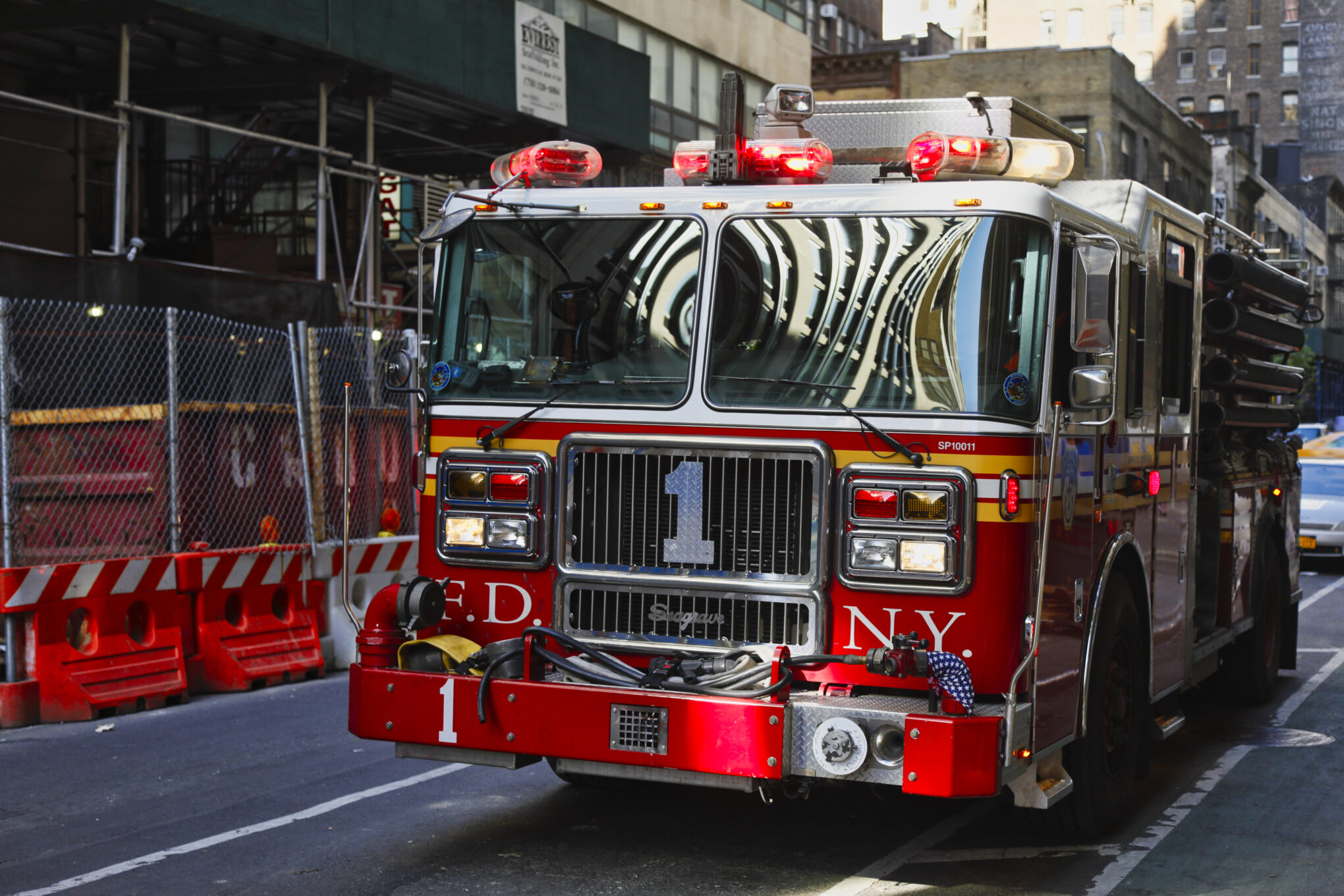
Retired Career Fire and EMS Lieutenant-Specialist, Writer, and Master Photographer, living in Vermont.
May 16, 2026—Middletown Springs, Vermont (Home)
If you think about it, metaphorically, everything eventually becomes metaphor if you give memory enough time to misbehave. Radio waves moving through the air long before I understood the difference between information and safety. A voice coming from the kitchen, or the living room, or the dashboard of whatever car Mom was driving.
WAMC, Fresh Air, Wait Wait Don't Tell Me, and whatever Rex Smith had called into the station to talk about that day. Dad knew Alan Chartock personally, which meant public radio existed in our house not only as background noise, but as something closer than that—one of those strange adult-world proximities that made my childhood feel more intellectually furnished than emotionally habitable.
The contradiction throughout childhood was that my father could provide almost anything except safety. He could provide objects, education, access, travel, music, books, cameras, tools, and vocabulary. He could place me near culture, history, science, and impressive people. He could afford to create the appearance of a life that should have been stable from the outside. But he could not love me without control, and control is not love.
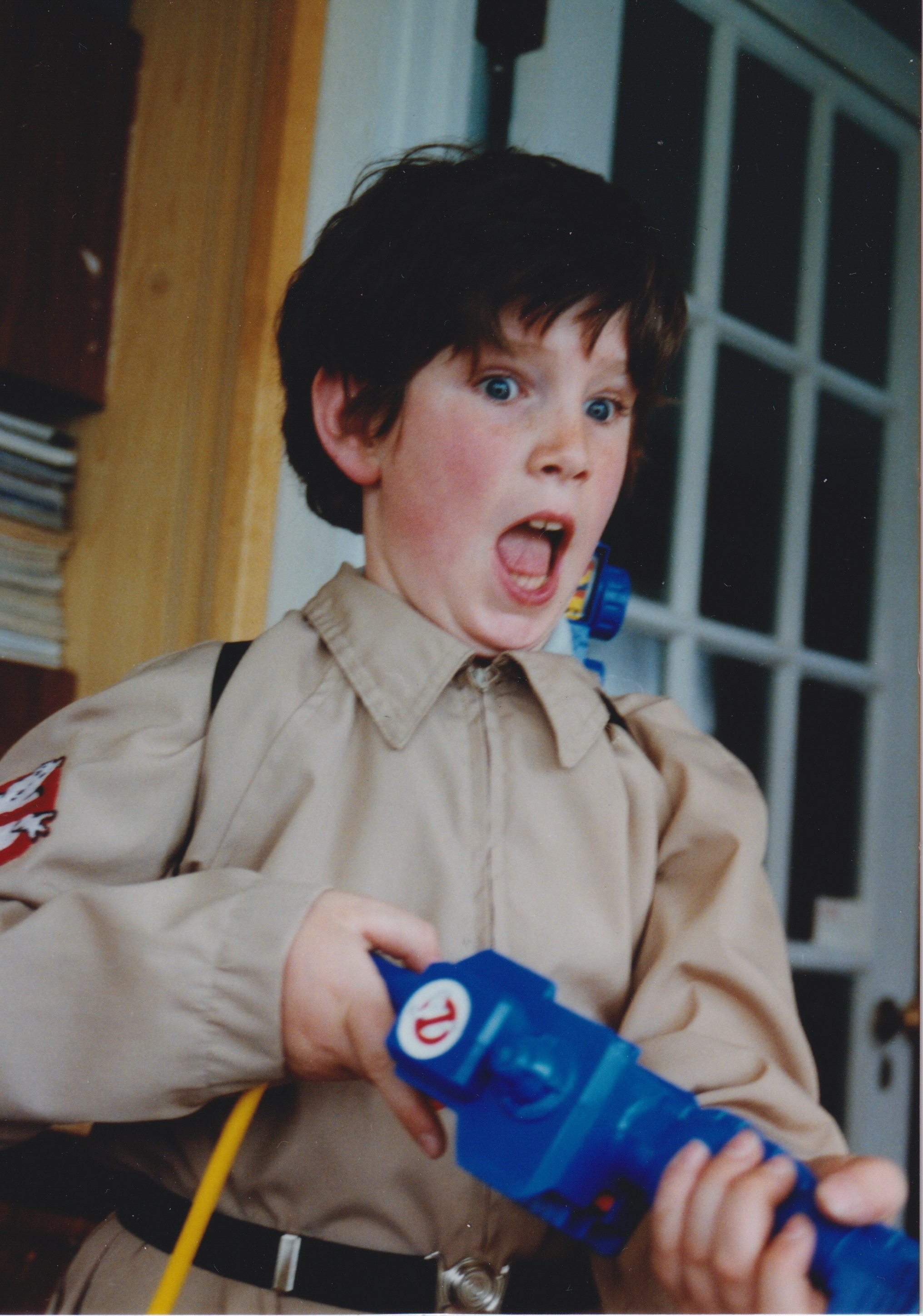
When I was young, he gave me what I wanted, part of the time without questioning it. The photographs show that. I am in the frame constantly—small, bright-eyed, already alert, already studying the world as if I knew it was going to turn against me and I wanted a record before it did. There are pictures where I am spoiled in the ordinary way children are spoiled before the adults around them realize they cannot control who that child is becoming. I had whatever reasonable thing could be bought or handed over.
At first, I was visible. Then my body began revealing the truth Dad was trying to hide, and that is when the pictures changed.
Not all at once. Nothing important ever seems to happen all at once. The most consequential damage is usually procedural. A haircut. A form. A school enrollment. A pronoun spoken loudly enough that everyone in the room understands which version of reality is tolerated.
Mom knew where the photographs were. In the last years of her life, she kept telling me where to look, and I did. Drawers. Envelopes. Boxes. Corners of rooms where paper and dust had been hiding for decades. She had hidden pieces of my childhood from my father, which sounds dramatic until I remember that in our house, evidence itself had to be protected. My childhood had a chain of custody. Mom preserved what he would have destroyed, and maybe she did it because she knew, long before I did, that one day I would need more than memory. I would need proof.
Photographs are strange witnesses. They do not explain motive, and they do not offer mercy. They simply hold the frame. At first, I was everywhere. Then, slowly, I wasn't. By eleven, my father decided it was time for me to "come to reality."
Come to reality, as if reality were his property. As if my body, my name, my identity, my girlhood, and every instinct I had carried from the beginning were some childish error waiting to be corrected by paternal authority.
He cut my hair. He enrolled me at summer camp as a boy. He made sure everyone understood that even though I looked like a girl, I was actually his son. I was glad when he left. He always brought nothing but heartache.
I was housed in the boys cabin. Dad had told me that if I wanted to attend camp, it would be as a boy. Sadly, he delivered on that promise.
I learned very quickly that certain places are only freeing if you are allowed to exist inside them honestly. Camp should have been easy for me. In many ways, it was an extension of what home used to be. The Adirondacks had a certain atmosphere in the early 1990s that I do not know how to describe properly. I have not felt it anywhere since.
The smell of woodsmoke, pine needles, sun-warmed docks, dirt roads, and cafeteria food all made sense. WIZN was always there at camp, and that station became part of the physical atmosphere of my summers, as much as mosquito bites and cabin bunks.
Camp had rhythm, and I loved rhythm. Wake up, move, eat, swim, hike, work, listen, disappear, return.
Mom sent me with my favorite oversized sweatshirt and my favorite pair of Doc Martens. I wore the sweatshirt everywhere I could, even when it made no sense for the heat, because my breasts were developing and I needed to hide them.
That sweatshirt was not clothing. It was concealment, comfort, stim, and one of the few forms of control still available to me. In every camp photo from those years, I am in loose clothing. Visibility became something I had to learn how to manage.
At age fourteen, I got my first period in the boys cabin at summer camp, in the middle of the night. There are childhood memories the body keeps with unreasonable precision. The darkness. The panic. The realization. The air in the cabin. The boys sleeping nearby. No immediate access to showers. No privacy. No adult I could safely ask.
The next morning at breakfast, the comments started about, "that smell", because boys that age are immature about those kinds of things. They started singing the bridge lyrics to the Lenard Skynyrd song That Smell. Afterwards, some of the girls I was friends with came over to me and told me not to pay attention to them.
I buried my underpants in the woods behind the cabin during rest hour.
In prior summers, my father had enrolled me in Boy Scouts too. He even went so far as to enroll me in Boy Scout camp, which turned into the disaster it was destined to become.
I refused to take my shirt off in front of anyone. I had to change separately. I had to shower separately. I insisted on it, but never stated the reason.
Even as a counselor at camp, I was housed in the boys cabin, still forced to play the role. By then, people suspected things. People are not stupid. They suspected for years, but nobody knew the truth until I finally revealed it in my forties.
Dad and the doctors had told me it would be harmful if anyone found out about my "problem."
I disappeared from where I grew up for thirty years because of it. That is social erasure. I was removed from the town that knew me, then routed through institutions designed to enforce a version of me that had never been correct. Over the years, I would stop by for a couple of days at a time, especially when I lived in the area, once a week—mainly to do my laundry at Mom's house.
My father did not need to kill me to erase me. He only needed to remove me long enough for people to stop looking for me.
I am grateful to have grown up before the era of hyper-connectedness and social media. Life moved slower then. People spent more time together. Time together mattered differently because it was not constantly competing with everything else.
When you sat with someone, you were usually just there with them instead of somewhere else at the same time. That is nostalgia.
Not the cheap kind you're supposed to feel. Not the kind people package and sell back to you with retro fonts and artificial sentiment. Real nostalgia is not wanting to relive the past.
Real nostalgia is simply remembering how life itself worked. How we worked. How we played. How we lived. How people called in song requests to radio stations. How voices belonged to regions. How hearing a song accidentally played twice on the radio meant everyone nearby was hearing it too, at the same time, under the same sky, and talking about it afterward. How local culture had a pulse before everything became searchable, portable, optimized, and dead behind the eyes.
Before the internet, I had music, my dog, my camera, and my notebooks. When the internet came along, I recognized it immediately. Not as novelty. Not as escape, but as extension of my creativity. I started posting my writing and photography online.
For a long time, I thought the ending of the story would need to be grand in order to count. I thought happiness, if it ever came, would arrive with scale—money, recognition, a huge circle of people, some final vindication loud enough to drown out every adult who had ever misunderstood me. I truly believed I'd never see age thirty, let alone forty.
I'm turning forty-seven this July. My perspective has changed, and the older I get, the more I understand that the loudest outcomes are often compensating for weak structure.
Today, I am happy. Finally, I can make that claim without reservation.
I am happy because the life I have now is mine. Amelia is here. Maddie is here. Matt and Trish are here too, in full Vermont fashion—neighbors who became friends simply by showing up consistently over time. My circle is small, but it works. That matters more than the appearance of abundance ever did.
I made it.
|
Copyright © 1998-2026 Emily Pratt Slatin. All Rights Reserved. About | Archives | Biography | EMD Codes | Notebook | Press Kit | Pronouns.page | RSS Feed | Sitemap | YouTube Made with grit in Middletown Springs, Vermont. |