
She/Her/Hers
Lesbian
|
|
EMILY PRATT SLATIN | About | Press Kit | Notebook | Music Playlist | She/Her/Hers Lesbian |
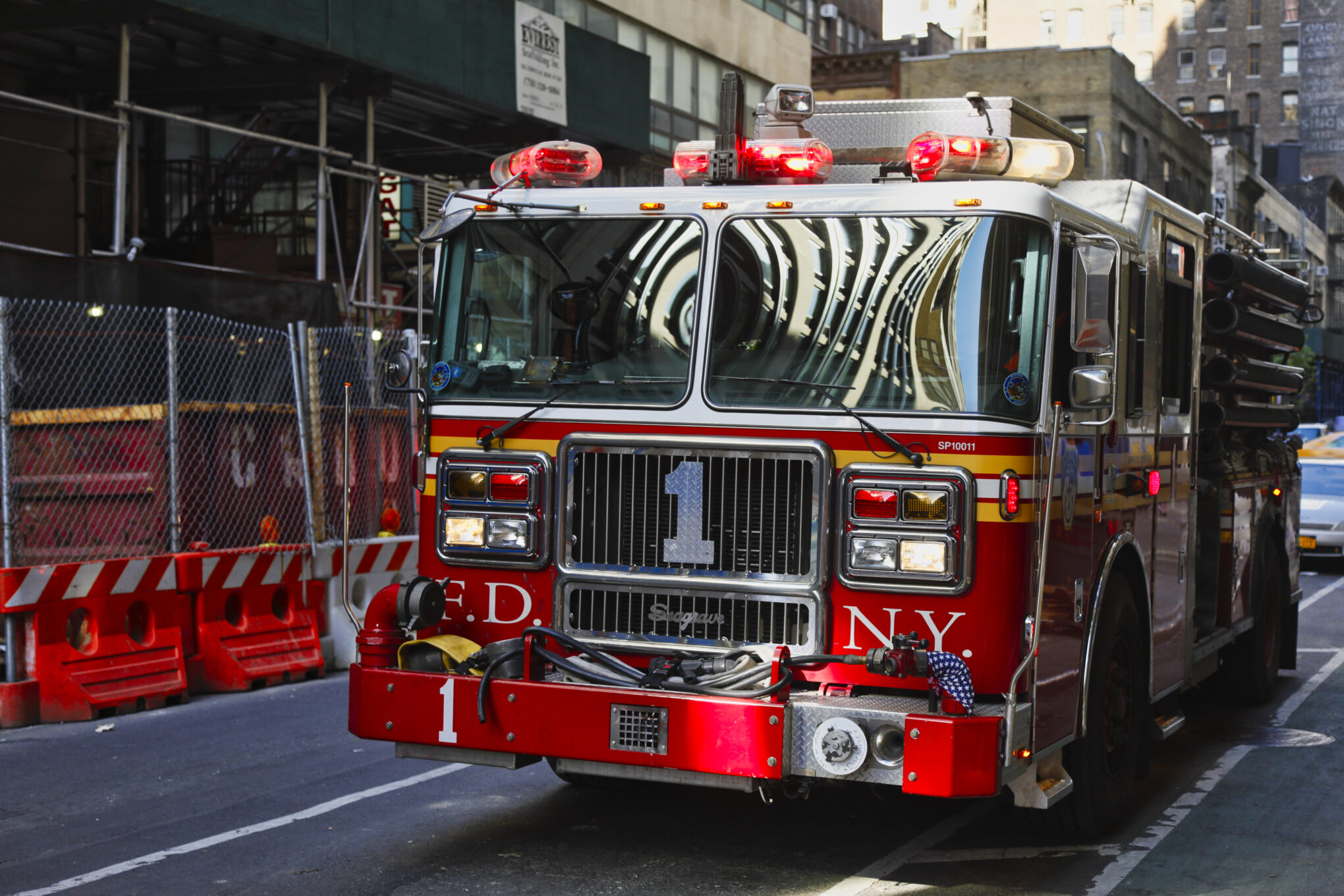
Retired Career Fire and EMS Lieutenant-Specialist, Writer, and Master Photographer, living in Vermont.
November 22, 2025—Middletown Springs, Vermont (Home)
I keep thinking about how strange it is, the way a family changes shape the second someone dies. I've seen it happen before, but this time it felt different—sharper around the edges, hollow in places I didn't expect. When my mother died this year, her house went quiet in a way that didn't feel like silence; it felt like a vacuum. It's one thing to lose a person, and another thing entirely to lose the one person who gave your life its origin. There was an enormous void, one I didn't see coming even though by now I probably should have.
In the days after she passed, I drove back to the old house where Angie and I used to live. I told myself I went because I had to, but the truth is that I just didn't want to be alone with the weight of it. Angie and I had somehow found our way back to being friends—funny how certain people drift out of your orbit and then drift back in right when the universe decides you shouldn't be standing on your own. She was steady in that familiar way. I went to see her at our old place, and it felt like walking into a ghost version of my own life. She didn't ask for anything from me, didn't push, didn't pry. She just let me sit there and breathe, which is all I was capable of anyway.
A day later, she came to my mother's house—my male cousin too—to help me sort through things. Two women and my distant cousin standing inside a house that hadn't changed much since my childhood, each of us pretending we knew where to begin. Mom's antique plates were the hardest part. Those ridiculous, delicate things stacked up behind cabinet glass like museum artifacts from a life she loved more than the people in it. Angie helped me pack them, wrapping each one like it mattered more than it did, and I let her. It felt like we were packing away the last version of my mother that the world recognized.
My cousin tried to talk to me like we hadn't spent years pretending the other one didn't exist. My whole family has always filed me into that category they never said out loud but always meant—special needs. Too sensitive. Too strange. The only one with a formal autism diagnosis. The only queer in the family. They liked to pretend it didn't factor into anything, that they weren't measuring me by those labels, but I could always feel the weight of it hanging in their tone, clinging to their expectations, shaping the limits they quietly imposed.
He took charge the second he walked in, as if my mother's house was some kind of estate sale waiting for his approval. He started rattling off the prices I could get for each of her antique plates, talking about market value and resale demand like any of that mattered more than the fact that she hasn't even been gone a month. He couldn't grasp the reality that I didn't need the money and wasn't looking to flip my mother's life for cash. I just wanted her collection put safely in storage in the basement until I could breathe again. Instead of respecting that, he began arranging everything like a dealer prepping inventory, stripping the sentiment out of the room piece by piece. It was all action and no thought, all assumption and no regard for what I said. It was like watching someone disassemble a memory while you're still trying to hold it in your hands.
To my face he called me Emily, repeating his line about how he didn't care that I was intersex, didn't care that I was his biologically female cousin, didn't care about me being married to a transgender woman. He claimed not to care about anything except being completely supportive. But the second he stepped aside with Angie, away from where he thought I could hear, he switched to my old name—the one nobody outside my immediate family had ever used—and he used male pronouns without hesitation, as if they were somehow truer than the life I've lived for forty-six years. Hearing it was like being dropped back into a version of myself I worked my entire life to escape. It wasn't ignorance, and it wasn't a slip. It was a choice. A quiet dismissal of everything everything I've always been, and everything he pretended to accept.
Aside from my own mother, I haven't seen or spoken to any of them in years. Walking through that house with people who share my DNA felt like visiting a childhood home through a museum window—recognizable, but inaccessible. I kept waiting for something to shift inside me, some old instinct to come back online. It never did.
I tried to reason with him, even though part of me already knew it was pointless. I showed him my driver's license first, the one that clearly names me as Emily Pratt Slatin and lists my legal sex as female. Then I pulled out my birth certificate, the original document that denoted me as female from the day I was born. If that wasn't enough, he had the in-person testimony of Angie—my ex girlfriend of nearly twenty years—standing right beside him, telling him plainly that I have lived my entire life as a woman. It felt ridiculous, having to present documentation like I was proving residency for a library card, but I did it anyway because I wanted to believe he might meet me halfway. I wanted to believe that evidence would matter more than whatever story he'd written in his head.
But after being handed undeniable proof—legal, historical, personal—that I've lived my entire life female, he still clung to his own version of reality like it was gospel. It didn't matter that the documents matched the person standing in front of him. It didn't matter that Angie confirmed every piece of it. It didn't matter that the facts were as straightforward as they come. What mattered to him was the comfort of his own narrative, the one where he could pick and choose which parts of me counted. And in that moment, it became painfully clear that no amount of truth was ever going to override the story he preferred to tell about me.
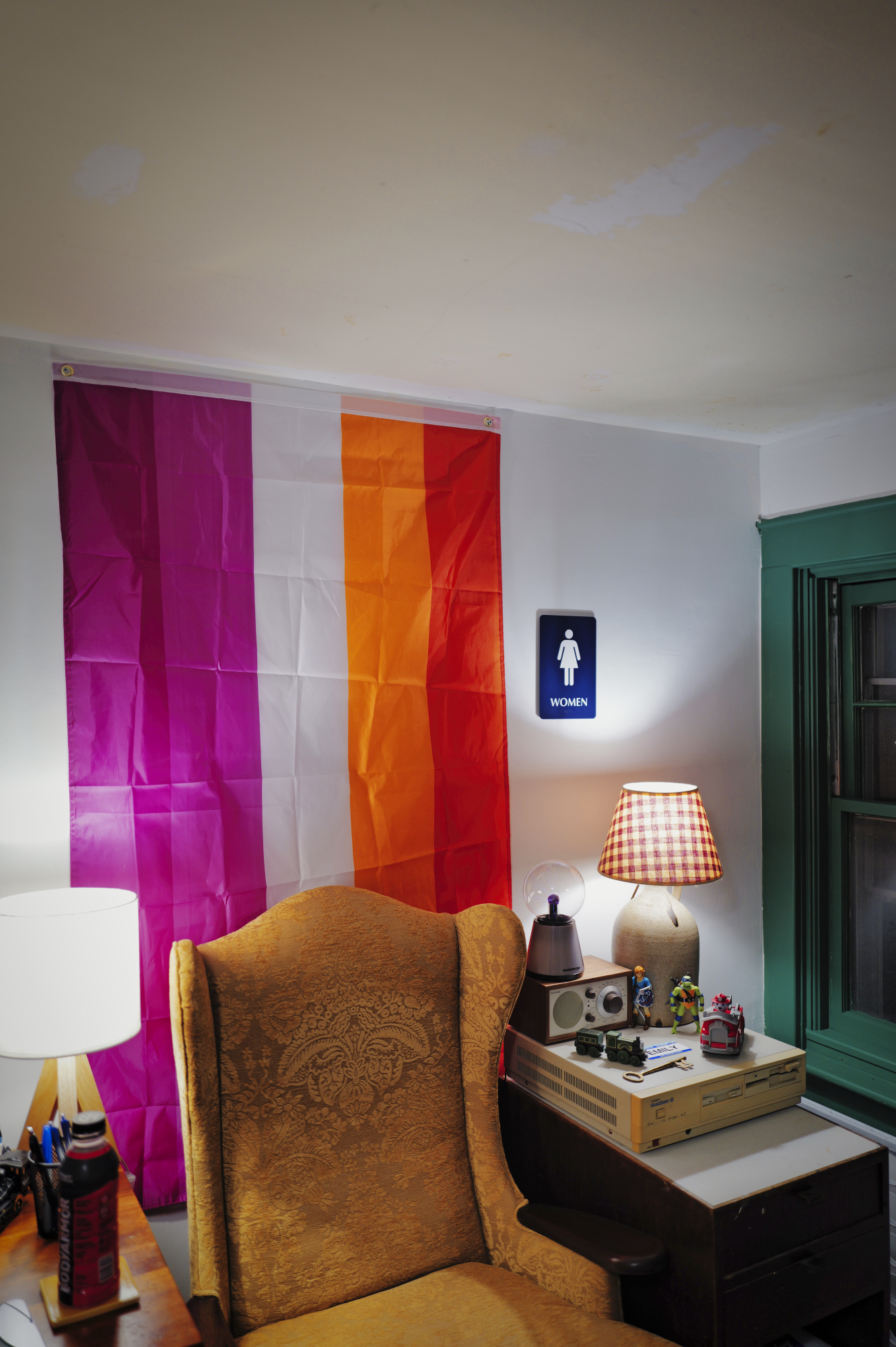
At some point I just walked back upstairs and hid in my childhood bedroom, because that was the only move that ever really worked when the world got too loud. Vanishing was my oldest survival skill. I survived my childhood, boarding school, and college by disappearing into whatever room I could claim as mine, shutting the door, and pretending the rest of the world didn't exist. It wasn't running away. It was preservation. It was the only place I ever felt remotely safe.
He followed me up there eventually, only to start picking at my autism as if it were something he could diagnose with a glance. He pointed to the six pillows on my bed—six soft, harmless pillows—and tried to use them as evidence that I was developmentally challenged, that I needed someone responsible to hold my hand through life. He then went on to say that I was indeed gay—Amelia is a transgender woman, and therefore it doesn't get any gayer than that. It was condescending in that slow, syrupy way some people weaponize concern, pretending they're helping while they're dismantling you. Six pillows became a character flaw, a symptom, an excuse to place me beneath him.
Instead of snapping, I reached for something older and truer. I opened the box of childhood photos mom kept and showed him pictures of myself in 1990, the daughter my mother raised from day one. It wasn't about proving anything. It was about letting the truth sit there between us, undeniable, preserved on glossy paper that had outlasted every lie my family ever tried to tell about me.
I pulled out the stack of patches I'd sent home to my mother every time I got a new fire department assignment. Mom had kept them in the same box along with my childhood photos. There were five department patches in total—each one handed to me as part of tradition upon assignment—handed with the weight of the work I would do, the risks I would take, the lives that would be saved, and the grit I needed to earn. I didn't have to explain any of it. I just let him look at the collection—proof that whatever story he'd built about me being incapable or fragile never matched the reality that I was a woman who made it out of those years alive.
Then, as if the afternoon hadn't already slipped into absurdity, he made the outrageous claim that nobody in the family had ever known I was queer, that this was all somehow brand-new information hitting him for the first time. It was such a blatant reach that I almost laughed. It had that familiar desperation to it—the scrambling people do when they realize the argument they built is collapsing around their feet and they need to salvage whatever pride is left, even if it means rewriting history on the spot. I came out at sixteen. I told everyone. Friends, family, teachers, neighbors, even my dog who slept at the foot of my bed. My queerness was never hidden, never ambiguous, never something I kept tucked away. It's impossible that he didn't know. What became clear in that moment wasn't his ignorance—it was the lengths he was willing to go to in order to avoid admitting he'd been wrong.
I stayed in my room most of the time, the way I used to when I was a kid—quiet, careful, shrinking myself down to take up as little space as possible in a house that technically belonged to me now. He kept coming back late at night, walking into my room unannounced, or talking through the door that divided our rooms like we were supposed to be bonding over grief. Then he'd wake before sunrise and make enough noise to jolt me out of whatever shallow sleep I'd managed. I counted down the days like I was waiting out a storm, using every ounce of energy to stay quiet and out of his way, retreating into the smallest version of myself in the very home where I'd already spent a lifetime doing the same.
By the afternoon on the last day, he was relentless. He started lecturing me about how I should ignore my doctors, the same doctors who diagnosed my intersex condition decades ago—they told me I was intersex and female when I turned 16, long before it was labeled under the code that would eventually become Q56.0. According to him, the only thing I really needed was to follow his lead. His coping mechanism had become alcohol, and somehow that made it the correct one. He talked like anyone who didn't numb themselves the way he did was doing life wrong, as if drowning reality in liquor was the sensible kind of wisdom I'd somehow been missing.
At some point something inside me just shut off, the way it always does when I've crossed that invisible internal line. In typical Autistic Emily fashion, I walked downstairs, planted myself directly in front of him, and with a blank, expressionless tone that even I could feel flattening the air between us, I said, "Get your things, put them in my car—we're leaving for the airport effective immediately." No raised voice. No argument. Just the kind of finality that doesn't leave any room for discussion.
He tried to push back, mumbling about how his plane wasn't taking off for several more hours, as if the schedule mattered more than the fact that I'd hit my limit. I didn't care. I'd had enough. I wasn't spending one more minute pretending the situation was salvageable.
I didn't say a word the entire drive. He filled the silence himself, going on and on about how accepting he was, how understanding, how supportive. He listed every flattering title he could assign himself—my favorite cousin, his best friend, his closest family member—like he thought repetition would make it true. His words were exactly what a middle-aged woman would want to hear from a relative trying to offer reassurance. But his actions—every one of them—told a completely different story.
When we reached the airport, I didn't bother asking what airline he was flying with or where he needed to be. I pulled my Ford Bronco up to the start of the pedestrian sidewalk outside the terminal and stopped. That was it. That was the end of whatever this had been. I told him to get out of the car.
He looked at me, wide-eyed, suddenly helpless. "I don't know where I'm going…" he said, followed by, "Aren't you going to give me a family goodbye hug?"
I put the Bronco in park, set the parking brake, stepped out, and said, "You're a grown up now. Figure it out. Follow the signs." Then I gave him the quickest, most perfunctory bro hug imaginable—a fraction of a second, no warmth, no meaning—before shutting the passenger door behind him without even breaking my glare. My face stayed exactly the way it always does when I'm finished with someone: serious, flat, unreadable.
Some goodbyes don't require commentary. The optics are enough.
|
Copyright © 1998-2026 Emily Pratt Slatin. All Rights Reserved. About | Archives | Biography | EMD Codes | Notebook | Press Kit | Pronouns.page | RSS Feed | Sitemap | YouTube Made with grit in Middletown Springs, Vermont. |